The rapid miniaturization of electronic devices has pushed heat dissipation entirely to its critical limits. High power densities found in modern EV modules demand aggressive thermal management strategies. Engineers face a strict trade-off when using traditional irregular fillers for these applications. Increasing filler loading to improve heat transfer drives up resin viscosity to unprocessable levels. It also accelerates equipment wear rapidly, destroying vital manufacturing components.
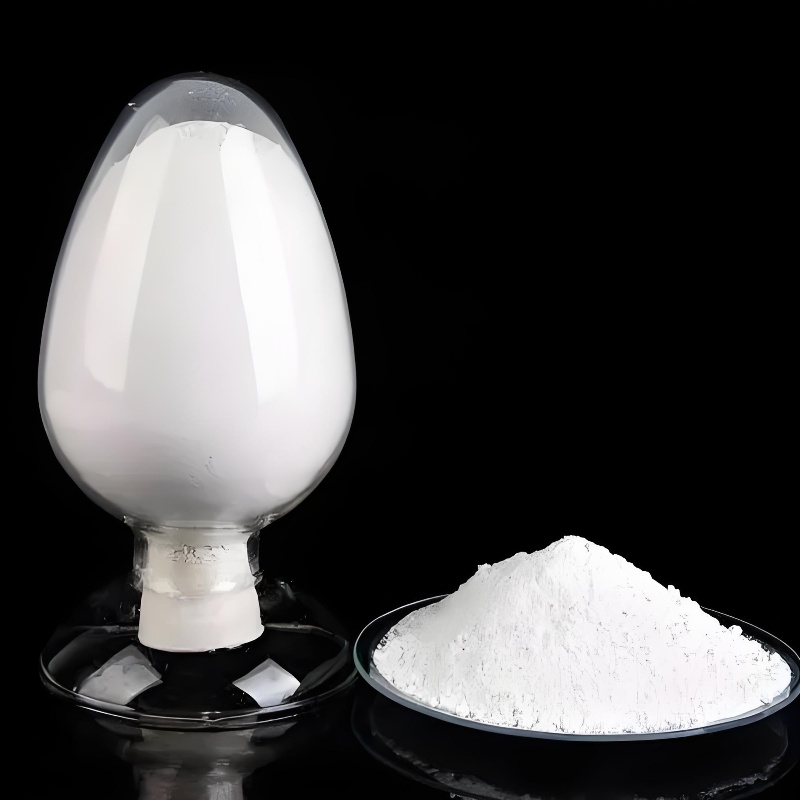
You need a specialized thermal conductive filler to overcome these physical barriers. Through its highly controlled morphology, spherical alumina powder allows maximum packing density. It breaks the viscosity barrier without compromising essential electrical insulation. This guide provides a technical evaluation framework for engineers and procurement teams. We will explore how to appropriately assess, specify, and implement these advanced materials in your electronic packaging designs.
Key Takeaways
Morphology Drives Processability: The smooth, spherical shape allows for high filler loading (up to 85 wt%) while maintaining low viscosity and reducing abrasive wear on mixing equipment.
Engineered Particle Size Distribution (PSD): Formulators can achieve optimal packing density by blending multi-modal particle sizes (typically ranging from 3μm to 70μm).
Purity Dictates Reliability: Low-soda grades (<0.05% Na₂O) are non-negotiable for applications requiring high electrical resistivity and long-term stability in semiconductor packaging.
Quantifiable Outcomes: When properly dispersed, spherical alumina can elevate the thermal conductivity of polymer matrices from ~0.2 W/(m·K) to between 3.0 and 6.0 W/(m·K) in standard thermal interface materials.
The Thermal Packaging Bottleneck: Why Traditional Fillers Fall Short
Thermal management systems routinely fail during the compounding stage before they ever reach a circuit board. This failure typically stems from an over-reliance on legacy filler shapes. Understanding the physical limitations of irregular particles helps engineers justify the transition to advanced morphological solutions.
The Viscosity vs. Loading Dilemma
Standard angular alumina powder or fused silica requires low loading limits. You must keep the compound pumpable. Pushing filler concentrations higher results in detrimental voids. You will experience poor flowability and catastrophic resin failure. Angular particles lock together mechanically under shear. This interlocking creates immense internal friction. Viscosity spikes rapidly make the compound impossible to dispense accurately. You inevitably sacrifice either thermal performance by lowering the filler ratio, or processability by maintaining it.
Abrasive Wear on Equipment
Irregularly shaped particles act like microscopic sandpaper inside your machinery. A sharp ceramic powder becomes highly abrasive under high-shear mixing conditions. It aggressively degrades dispensing nozzles. It destroys the inner linings of compounding extruders. It damages expensive steel molding tools. This constant physical degradation drives up maintenance downtime significantly. You lose production capacity while replacing worn components.
Isotropic Heat Conduction
Angular particles tend to create highly anisotropic thermal pathways. Heat travels efficiently in one direction but encounters severe resistance in others. The jagged edges disrupt uniform contact points between the filler and the resin. Spherical shapes solve this problem elegantly. They promote a more uniform, predictable thermal network. They distribute heat evenly throughout the polymer matrix. You achieve reliable isotropic cooling regardless of the component's orientation.
Evaluating Spherical Alumina Powder: Critical Specification Dimensions
Procuring raw materials requires more than reading a basic specification sheet. You must evaluate three crucial dimensions to ensure the filler aligns perfectly with your rheological and thermal targets.
Particle Size Distribution (PSD) and Multi-Modal Blending
Always evaluate the D10, D50, and D90 metrics rigorously. Single-size particles leave large interstitial gaps behind. Optimal thermal pathways require blending distinct sizes together. Formulators build a dense structural network by using 70μm particles for bulk volume. They then introduce 9μm and 3μm particles to fill the remaining microscopic voids. Higher tap density directly correlates with lower resin demand. It also unlocks higher achievable thermal conductivity.
| | | Table 1: Impact of PSD Blending on Packing Density |
Blend Type | Particle Sizes Used (μm) | Relative Void Volume | Achievable Loading (wt%) |
Uni-modal | 50 | High | ~60% |
Bi-modal | 50 + 10 | Medium | ~75% |
Tri-modal | 70 + 9 + 3 | Low | Up to 85% |
Chemical Purity and the "Low Soda" Requirement
Assess the XRF chemical analysis closely before approving a batch. Al₂O₃ purity must typically exceed 99.5% for high-performance electronic filler applications. Sodium oxide (Na₂O) impurities cause major electrical problems. They compromise dielectric strength immediately. They induce severe ionic contamination over time. You must distinguish strictly between regular, low-soda, and washed grades. Base your material choice entirely on the specific electrical insulation requirements of the target IC or PCB.
Surface Area and Sphericity Ratio
Shape perfection controls flow behavior. High sphericity ratios (>0.90) minimize the surface area for any given unit volume. This geometric reality is your primary mechanism for success. It keeps resin viscosity low. It ensures excellent, rapid wetting by the polymer base. Pure spherical alumina rolls fluidly under mechanical shear forces. It slides past adjacent particles smoothly instead of grinding against them.
Application Baselines: Mapping Filler Specs to Electronic Components
Theoretical specifications mean nothing without direct application alignment. Different electronic packaging types demand wildly different filler formulation strategies.
Thermal Interface Materials (TIMs) & Gap Fillers
Success Criteria: You need incredibly high conformability. You must achieve zero pump-out during thermal cycling. Thermal conductivity targets generally hit 3.0 to 6.0 W/(m·K) for standard commercial systems.
Filler Strategy: Formulators utilize high-sphericity powder explicitly. They mix it into soft silicone or flexible epoxy matrices. This ensures the resulting TIM dispenses cleanly. You achieve a microscopically thin, void-free bond line. It sits flawlessly between CPUs, GPUs, and their respective copper or aluminum heat sinks.
Epoxy Molding Compounds (EMCs) & Underfills
Success Criteria: Ultra-low viscosity remains completely non-negotiable here. You need rapid capillary flow under tightly packed flip-chips. You also need massive loading capacities (70–85 wt%). This loading level matches the Coefficient of Thermal Expansion (CTE) of the silicon chip itself.
Filler Strategy: We utilize specialized micro-scale or sub-micron blends. A highly precise PSD is crucial for underfills. It ensures the filler never filters out dynamically. It absolutely prevents large particles from blocking narrow gaps during the high-pressure injection process.
EV Battery Potting & Structural Adhesives
Success Criteria: Focus shifts heavily toward bulk heat dissipation. You also need serious mechanical vibration resistance. Flawless electrical isolation for cylindrical or prismatic cell packs remains critical to prevent thermal runaway.
Filler Strategy: You must balance performance parameters carefully. Formulators often blend an advanced heat dissipation filler with standard coarse materials. They focus intensely on macro-scale thermal routing. Mechanical toughness often takes priority over micro-gap penetration here.
Transitioning to spherical particles introduces specific formulation challenges. Engineers must adapt their chemical handling and mixing protocols to accommodate these dense, smooth particles.
Surface Treatment Requirements
Untreated materials frequently struggle in modern resin systems. They may suffer from extremely poor interfacial adhesion. The polymer matrix will eventually reject them over time. You must evaluate the absolute necessity of silane coupling agents. Surface-modified grades prevent ambient moisture ingress effectively. They also improve uniform dispersion remarkably. Without proper surface treatment, microscopic air gaps will form around the particle. These gaps act as severe thermal insulators, ruining your conductivity goals.
Settling and Rheology Control
These are exceptionally heavy particles. They boast a specific gravity near 3.9 g/cm³. They settle fast in low-viscosity liquid resins during extended storage. Formulators must address this physical reality immediately. You need reliable chemical anti-settling additives. You also need strictly enforced agitation protocols before use.
Common Mistakes to Avoid:
Storing pre-mixed resins for extended periods without rolling or tumbling the containers.
Failing to degas the mixture after adding high-density fillers, trapping microscopic air bubbles.
Ignoring temperature fluctuations in the facility, which alter the base resin viscosity and accelerate filler settling.
The complex manufacturing process heavily dictates material selection. Producers use intensive thermal plasma melting or highly specific mineralization techniques to achieve perfect sphericity. Procurement teams should carefully baseline the exact thermal conductivity requirement. Do not blindly over-specify particle sphericity. Use ultra-pure spherical grades specifically where standard angular blends fail to meet your rheological parameters. Align the grade strictly with the engineering limits of your existing dispensing equipment.
| | | Chart 1: Comparative Rheological Risks by Filler Type |
Filler Type | Settling Risk | Viscosity Spike Risk | Dispenser Wear Risk |
Angular Alumina | Low | High | High |
Spherical Alumina (Untreated) | High | Low | Low |
Spherical Alumina (Surface Treated) | Medium | Low | Low |
Shortlisting Suppliers: Next Steps for Procurement and Engineering
Choosing a manufacturing partner requires intense technical scrutiny. You cannot rely purely on marketing brochures. You must demand verifiable, empirical data.
Review Technical Data Sheets (TDS)
Look far beyond the theoretical maximum numbers. Theoretical thermal conductivity rarely matches real-world component performance. Request actual data detailing viscosity curves. You need these flow curves at different loading percentages. Ensure they test these curves using your specific base resin type. This includes epoxy, silicone, or polyurethane systems. A supplier should know exactly how their powder interacts chemically with your chosen polymer.
Request Lot-to-Lot Consistency Data
Consistency directly makes or breaks your automated production line. Inquire deeply about their internal process controls.
How do they physically control the Particle Size Distribution across thousands of kilograms?
What exact analytical methods do they employ to monitor sodium content?
How frequently do they calibrate their thermal plasma equipment?
Manufacturing repeatability guarantees your long-term product reliability. A single out-of-spec batch can destroy thousands of delicate semiconductor packages.
Sample Testing Validation
Never approve a material without rigorous physical validation. Procure adequate sample sizes first. Run precise rheometer testing in your own lab facility. Perform thermal impedance measurements based strictly on the ASTM D5470 standard. Test these properties on fully cured composite plaques. Simulating the actual curing cycle reveals hidden flaws in the filler-matrix interface.
Conclusion
Transitioning to spherical particles represents a mandatory engineering step for modern thermal management systems. The physical limitations of high-density electronic packaging simply demand it.
To succeed, abandon one-size-fits-all assumptions entirely. You must rigorously match the particle size distribution, purity grade, and surface chemistry to your exact manufacturing limits. Engage exclusively with suppliers who provide highly transparent application data. They should offer extensive formulation support rather than just sending over raw material specifications. Take action today by requesting multi-modal samples and running baseline rheology tests against your legacy fillers.
FAQ
Q: What is the maximum thermal conductivity achievable with spherical alumina fillers?
A: Individual alumina particles have a high intrinsic thermal conductivity (~30 W/m·K). However, the final composite's conductivity depends entirely on the resin, loading volume, and filler network. Practically, you can reach 2.0 to 6.0 W/(m·K) in typical polymeric applications. You can achieve much higher figures in specialized sintered ceramics.
Q: Why is spherical alumina preferred over silica for advanced electronics?
A: Fused silica certainly offers excellent low-CTE properties and superb electrical insulation. Nevertheless, spherical alumina provides significantly higher intrinsic thermal conductivity. This singular trait makes it the vastly superior choice for power-dense packaging where heat extraction outweighs pure CTE matching.
Q: Can spherical alumina be blended with other thermally conductive materials?
A: Yes. Formulators frequently mix spherical alumina with angular alumina to optimize specific performance metrics. Furthermore, you can use it in hybrid systems alongside aluminum nitride (AlN) or boron nitride (BN). This helps hit aggressive thermal targets while safely managing overall system viscosity.
Q: How does the sodium content affect the performance of an electronic filler?
A: High sodium (soda) levels introduce reactive free ions directly into the polymer matrix. These mobile ions drastically reduce electrical resistance under voltage stress. This inevitably leads to short circuits or severe signal degradation in highly integrated semiconductor packages. Low-soda grades are absolutely essential for high-reliability environments.


