Advanced microelectronics like HPC chips and 5G antenna arrays face escalating operational demands. Rapid thermal cycling and severe signal loss now heavily dictate your packaging material choices. As interconnects shrink and Wafer-Level Packaging (WLP) rapidly advances, traditional irregular fillers completely fail. They simply cannot meet the strict flowability and dielectric thresholds required by modern, dense chip architectures. Integrating high purity silica is now the non-negotiable standard for resolving these exact issues. It effectively fixes Coefficient of Thermal Expansion (CTE) mismatches and stubborn rheology bottlenecks. You will learn how this vital material ensures flawless performance in modern electronic encapsulation. We will also explore its crucial role in stabilizing Low Temperature Co-fired Ceramic (LTCC) substrates.
Key Takeaways
Packing Density vs. Viscosity: Achieving >85 wt% fill rates requires precise particle size distribution (PSD) control to balance coarse particles with ultrafine dust (fume).
Signal Integrity: Electronic grade silica with low dielectric constants (dk 3.8–4.0) is critical for minimizing RC delay in densely packed circuits.
Thermal & Structural Stability: Advanced processing (such as aluminum-induced crystallization to cristobalite) ensures precise CTE matching without risking alkaline contamination.
Application-Specific Sizing: Successful deployment relies on matching D50 specs to the process—sub-10μm for Molded Underfill (MUF) and ICs; 10–20μm for Copper Clad Laminates (CCLs) and TIMs.
The Engineering Case: Resolving Encapsulation and LTCC Bottlenecks
High-density electronics frequently experience catastrophic failure modes if materials are improperly specified. Thermal expansion mismatch acts as the primary culprit behind structural warping in delicate packaging. When temperatures fluctuate, differing expansion rates between the silicon die and the surrounding resin create severe mechanical stress. This stress shears delicate wire bonds and delaminates protective layers. Furthermore, as line spacing shrinks in modern PCB layouts, resistance-capacitance (RC) delay severely bottlenecks signal speed. Unoptimized dielectric materials absorb and trap signal energy, ruining data transmission rates.
Fillers play a critical role in mitigating these risks. Incorporating spherical silica powder dramatically reduces the overall CTE of epoxy molding compounds (EMCs). By displacing high-expanding resin with low-expanding silica, engineers stabilize the entire package matrix. The spherical shape ensures you maintain the structural rigidity necessary for fragile semiconductor environments without compromising resin injectability during manufacturing.
This requirement extends directly into ceramic manufacturing. Precise LTCC ceramic powder integration relies heavily on pure silica additives. High-purity inputs allow manufacturers to lower the initial sintering temperature. This enables the co-firing of highly conductive silver or copper traces without melting them. More importantly, it maintains excellent high-frequency dielectric stability and guarantees virtually zero shrinkage variability across production batches.
Rheology and Particle Geometry: The Science of High-Density Packing
You cannot achieve high fill rates using angular or crushed quartz. Irregular shapes interlock, creating massive friction that stalls resin flow. Spherical geometry remains mandatory for achieving maximum packing density. By leveraging perfectly round particles, engineers routinely surpass the theoretical 74% limit of hexagonal close packing. They achieve fill rates exceeding 85 wt% without spiking compound viscosity. This exceptional flowability ensures the compound safely navigates microscopic cavities without snapping wire interconnects.
Managing ultrafine particles, often called "fume," presents a complex engineering challenge. Flame spheroidization naturally generates ultrafine particles measuring around 0.1 μm. These tiny spheres possess a dual-edged nature. In low concentrations, they act as miniature ball bearings. They lubricate the gaps between larger particles and assist in capillary cavity filling. However, excessive fume drastically increases the total surface area, rapidly absorbing available resin and destroying flowability.
Industry consensus dictates keeping ultrafine particles controlled around the 20 vol% threshold. This specific ratio perfectly balances particle lubrication against catastrophic viscosity spikes. Consider the following breakdown of how fume concentrations affect compound behavior:
Fume Concentration (vol%) | Lubrication Effect | Compound Viscosity Impact | Suitability for Narrow Gap Filling |
< 5% | Poor (High friction) | Moderate (Prone to settling) | Low (Causes voiding) |
15% - 25% | Optimal | Low (Stable flow) | Excellent |
40% - 50% | Counterproductive | Catastrophic (Solidifies) | Unusable |
Surface functionalization also plays a mandatory role in rheology management. Raw silica inherently resists organic resins. Therefore, you must apply silane surface treatments. Silane acts as a chemical bridge, actively improving compatibility with epoxy matrices. Properly treated spherical silica reduces unwanted precipitation in storage tanks. It completely prevents phase separation during the high-temperature curing phase.
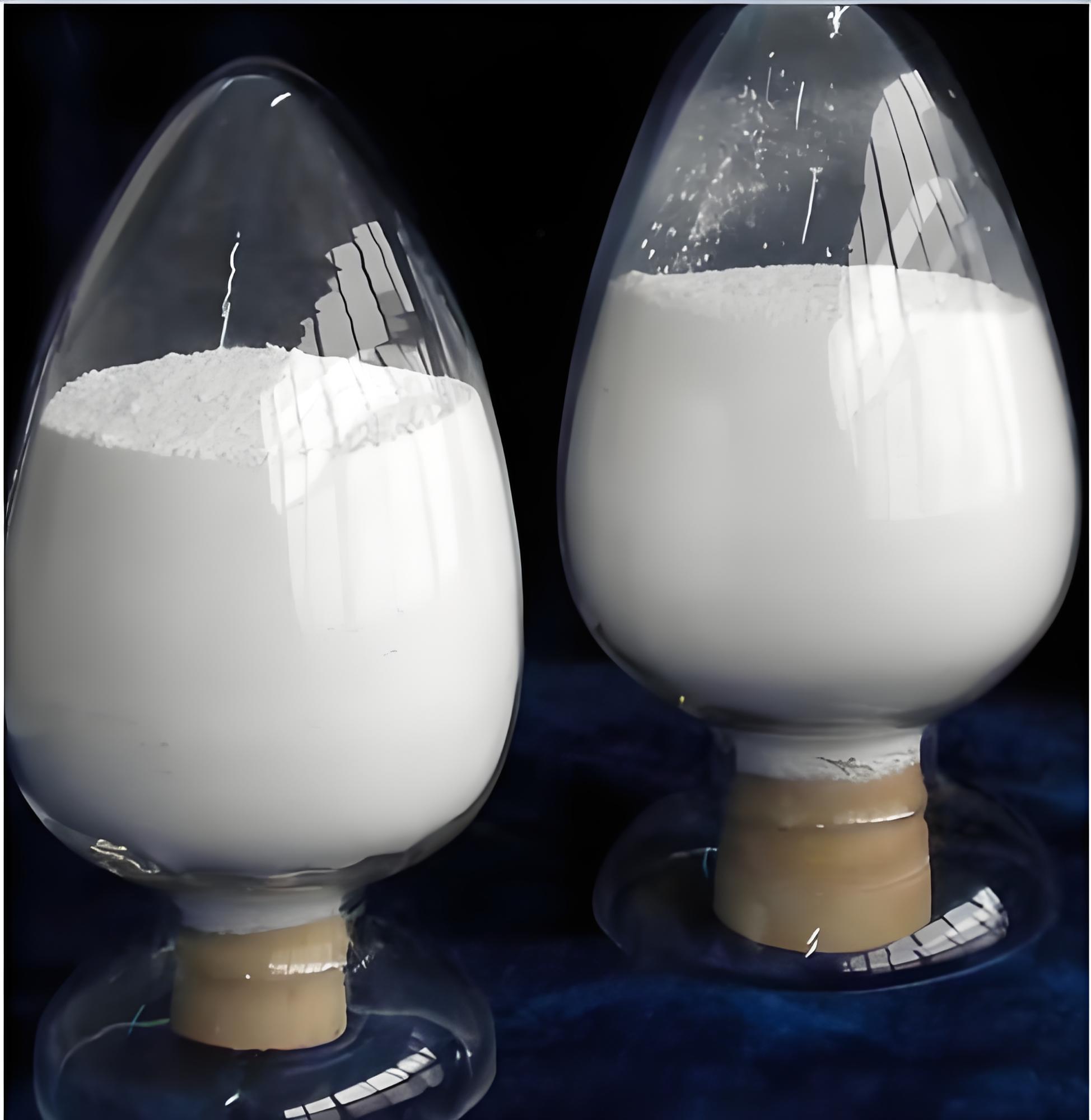
Standard amorphous silica exhibits an extremely low CTE, often hovering around 0.5 ppm/K. While seemingly beneficial, this value frequently falls too low to perfectly mirror the thermal expansion of specific semiconductor chips and copper substrates. To fix this, engineers execute phase transformations. They convert amorphous structures into crystalline forms, such as cristobalite. Using carefully controlled aluminum-induced crystallization, manufacturers achieve precise CTE matching. This process avoids the severe risks associated with traditional alkaline-based sintering methods.
Purity limitations introduce another massive hurdle for advanced packaging. Contamination ruins yields. Modern nodes strictly require 7N (99.99999%) high-purity powder. Trace metals pose immense dangers to sensitive microelectronics. You must strictly limit elements like Aluminum, Sodium, Calcium, Titanium, and Potassium to below 0.01 ppm. Failing to do so invites disastrous consequences. Sodium ions migrate under electrical fields, causing severe insulation degradation and line corrosion. Furthermore, radioactive trace impurities emit alpha particles, which directly trigger soft errors in high-density memory ICs.
Thermal management demands frequently outpace the natural capabilities of pure silica. This drives the growing trend of hybrid fillers. Compounders now mix premium electronic grade silica with highly conductive materials to create advanced Thermal Interface Materials (TIMs). This hybridization strategy offers several distinct engineering advantages:
Enhanced Thermal Pathways: Boron Nitride or Alumina particles create robust conductive bridges, rapidly transferring heat away from the die.
Maintained Flowability: Silica spheres offset the abrasive, angular nature of the conductive additives, preserving the injection speed.
Cost Optimization: Displacing expensive Boron Nitride with precisely measured silica spheres balances thermal targets without breaking project budgets.
Dielectric Integrity: The hybrid blend retains excellent electrical insulation properties, preventing unwanted shorts across the thermal layer.
Particle Size Mapping: Selecting the Right Semiconductor Powder
Selecting the correct particle size distribution (PSD) dictates the success of your encapsulation process. Using oversized particles in narrow gaps causes blockages. Using undersized particles everywhere causes viscosity failures. Engineers classify these materials into three primary size categories based on their D50 specification.
Ultrafine Category (0.01µm–10µm)
This category demands the most stringent manufacturing controls. You primarily use this premium semiconductor powder for Molded Underfill (MUF) applications, advanced IC packaging, and complex photolithography tasks. In lithography, ultrafine sizes specifically reduce line-edge roughness. The outcomes are highly predictable. You achieve uniform filling of microscopic narrow gaps, greatly enhanced dielectric strength, and minimal signal loss at high frequencies.
Mid-Range Category (10µm–20µm)
Mid-range sizing serves as the workhorse for broader electronic applications. Primary uses include rugged potting compounds, Copper Clad Laminates (CCL), and specialized LTCC blends. When deployed in these environments, the outcomes include significantly improved substrate rigidity. You will notice excellent resin adhesion and highly stable mechanical reinforcement against physical shock and vibration.
Coarse Category (>20µm)
Coarse particles serve a very different structural purpose. Their primary use involves bulk mechanical filling and standard surface coatings where microscopic penetration is unnecessary. The outcomes prioritize cost-effective volume displacement. They provide macroscopic insulation for large power modules and heavy-duty industrial sensors.
Size Category (D50) | Primary Application | Key Engineering Outcome |
Ultrafine (0.01 - 10µm) | Molded Underfill, ICs, Lithography | Narrow gap fill, low signal loss |
Mid-Range (10 - 20µm) | CCL, Potting, LTCC Ceramics | Substrate rigidity, resin adhesion |
Coarse (>20µm) | Bulk Filling, Standard Coatings | Volume displacement, bulk insulation |
Supplier Evaluation: Procurement Risks and Quality Assurance
Procuring reliable raw materials requires understanding the intense manufacturing realities your suppliers face. High-precision spray drying and flame spheroidization involve extreme technical difficulties. Achieving tight, sub-3-micron narrow distributions pushes production equipment to its physical limits. These processes demand massive energy inputs and constant calibration to prevent agglomeration.
Lot-to-lot consistency represents the most critical metric for any buyer. Formulations that work perfectly in beta testing often fail in production if the supplier's consistency drifts. Advise your procurement teams to evaluate suppliers strictly based on their real-time combustion monitoring systems. Do they use classification feedback loops? Your baseline benchmark should demand strict roundness deviation control to <1% between consecutive batches.
To safely navigate procurement risks, follow a strict shortlisting logic. Before ever requesting pilot samples, procurement engineers must enforce a rigorous documentation review. Implement the following verification steps:
Request SEM Imagery: Scanning Electron Microscope images visually verify actual particle roundness and highlight unwanted agglomerates.
Review DTA Data: Differential Thermal Analysis confirms the precise crystallization phase, ensuring the CTE behaves as advertised under heat.
Analyze ICP-MS Reports: Inductively Coupled Plasma Mass Spectrometry provides undeniable proof that trace metals remain strictly below the 0.01 ppm threshold.
Verify BET Specs: Specific surface area measurements dictate how much resin the powder will absorb, allowing you to predict viscosity behavior accurately.
Conclusion
Specifying spherical silica goes far beyond basic material substitution. It represents a critical process engineering decision that heavily impacts WLP yields, signal transmission integrity, and overall thermal survival. By strictly controlling particle geometry and demanding extreme elemental purity, you actively protect modern interconnects from devastating failure modes.
For your next steps, encourage your engineers and procurement teams to align closely before sourcing materials. Map your specific gap-fill requirements and dialectic targets directly against a vendor’s D50 distribution curves. Always validate surface treatments and trace metal documentation before initiating any pilot testing phase. Taking these decisive actions ensures your packaging compounds perform flawlessly under intense operational stress.
FAQ
Q: Why is spherical silica preferred over angular or irregular silica in semiconductor packaging?
A: Spherical shape drastically reduces friction, allowing for much higher filler loading (often >85 wt%). This shape maintains the exceptionally low viscosity required for injecting resins into microscopic chip cavities. It flows smoothly, completely preventing wire sweep damage and air void formation during the molding process.
Q: What defines "electronic grade" high purity silica?
A: It typically refers to ultra-high purity levels ranging from 99.9% to 99.99999% (7N). In these grades, disruptive trace metals like Sodium, Potassium, and Iron are restricted to parts-per-billion levels. This extreme purity prevents electrical shorting, insulation degradation, and alpha-particle emissions that cause soft errors.
Q: How does spherical silica powder impact LTCC manufacturing?
A: In LTCC applications, it acts as a critical tuning agent. It specifically stabilizes the dielectric constant, ensuring clean transmission for high-frequency (5G/RF) signals. Additionally, it helps engineers meticulously control physical shrinkage rates during the low-temperature co-firing process, ensuring precise dimensional stability.
Q: Can particle size distribution (PSD) affect thermal cycling failures?
A: Yes. An unoptimized PSD directly leads to microscopic voids or highly uneven packing within the compound. This creates localized stress concentrations that cause severe cracking or delamination under rapid thermal cycling. Precise PSD ensures homogenous CTE reduction, protecting the entire die structure.


