As semiconductor nodes shrink and 5G/6G high-frequency applications scale rapidly, thermal and electrical stresses in IC packaging have reached critical thresholds. Device miniaturization pushes operating temperatures higher, exposing inherent material flaws in everyday components. Traditional fillers are no longer sufficient to manage the thermal mismatch between silicon dies and organic substrates. When this mismatch goes unmanaged, constant thermal cycling triggers micro-cracking and premature device failure. Amorphous silica—specifically highly refined fused silica powder—has become the baseline filler for advanced Epoxy Molding Compounds (EMCs) and Copper Clad Laminates (CCLs). This guide breaks down the physical properties, morphology choices (spherical vs. angular), and evaluation criteria for selecting electronic packaging powder. We will help your engineering and procurement teams align material specs with strict manufacturing yield requirements. You will learn how particle shape impacts filler loading and why radiochemical purity ultimately dictates final module reliability.
Key Takeaways
Thermal Stability: Fused silica powder drastically reduces the Coefficient of Thermal Expansion (CTE) of packaging resins, preventing die cracking and package warpage.
Signal Integrity: Ultra-low dielectric constant (Dk) and dissipation factor (Df) make this SiO2 powder mandatory for high-frequency RF and 5G/IoT devices.
Morphology Matters: Spherical silica micro powder enables higher filler loading rates (up to 90%) with lower viscosity compared to angular powder, critical for high-density advanced packaging.
Sourcing Priority: Evaluation must prioritize batch-to-batch Particle Size Distribution (PSD) consistency, radiochemical purity (low U/Th), and reliable surface coupling treatments.
1. The Role of Fused Silica Powder in Advanced IC Packaging
IC packaging resins naturally have high thermal expansion and poor thermal conductivity. When paired with high-heat silicon, thermal cycling causes immense stress, micro-cracking, and premature device failure. Organic polymers expand and contract rapidly during heating and cooling phases. Silicon, conversely, remains highly rigid. This difference creates shear stress across solder bumps and substrate interfaces. Over time, this repetitive stress leads to delamination and critical faults.
By incorporating high-purity fused silica (an amorphous, non-crystalline phase of SiO2), manufacturers can actively manipulate the composite's thermo-mechanical properties. This material anchors the polymer matrix. It acts as a physical barrier against excessive expansion. When blended correctly, it transforms weak organic resins into robust encapsulation materials capable of surviving harsh thermal environments.
You will see this filler deployed across three primary areas in electronics manufacturing:
Epoxy Molding Compounds (EMCs): Crucial for semiconductor encapsulation. They protect delicate wire bonds from environmental moisture and mechanical shock.
Copper Clad Laminates (CCLs): Vital for high-frequency printed circuit boards. They maintain structural and signal integrity in modern telecommunications infrastructure.
Underfill Capillary Materials: Deployed extensively for flip-chip packages. They flow smoothly under the die to lock solder joints firmly in place.
2. Core Material Properties Defining Electronic Grade Powder
Pure fused silica exhibits an ultra-low Coefficient of Thermal Expansion (CTE) of roughly 0.5 × 10⁻⁶/K. High fill rates physically constrain the epoxy matrix. This brings the overall package CTE closer to that of the silicon die (approx. 3.0 × 10⁻⁶/K). Bridging this gap prevents catastrophic die cracking. It also stops package warpage during intense solder reflow processes.
High-frequency electrical performance relies heavily on dielectric stability. This material maintains a dielectric constant (Dk) around 3.5 to 3.8 and a dissipation factor (Df) below 0.0005 at 10GHz. Evaluation context: You will find these parameters essential for minimizing transmission loss and signal delay in RF/microwave packaging. As devices operate at higher frequencies, any dielectric instability causes immediate data attenuation.
Chemical purity and alpha-particle control separate standard fillers from true high-end electronic grade powder. Suppliers must maintain strict control over alkali metals (Na, K, Li). Traces of these metals mobilize under electrical fields, causing devastating electrical leakage. Furthermore, production requires ultra-low Uranium and Thorium levels (< 1 ppb). These trace elements emit radioactive alpha particles. Alpha-particle-induced "soft errors" randomly flip binary bits in DRAM and SRAM memory chips, which can crash entire computing systems.
Unlike calcined natural quartz, fully fused amorphous silica contains no crystalline cristobalite. This distinction matters deeply for thermal stability. Cristobalite undergoes a sudden phase-transition around 270°C, causing a sharp volume expansion. Eliminating this crystalline phase ensures stable volume and prevents sudden stress spikes during high-temperature manufacturing steps.
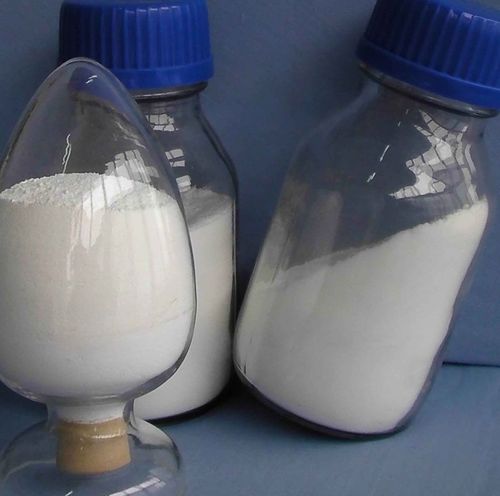
3. Spherical vs. Angular Silica Micro Powder: A Decision Framework
Choosing the right particle morphology profoundly impacts your production yields and component reliability. The industry primarily splits materials into angular and spherical formats.
Angular Silica Powder (Crushed):
Production: Made by melting raw quartz into massive ingots, then mechanically milling and grading them into finer particles.
Pros: Highly cost-effective. It provides sufficient performance for legacy ICs, standard discrete components, and thick-film applications.
Cons: The jagged edges are highly abrasive to molding equipment. The higher surface area drastically increases resin viscosity. This limits maximum filler loading, which typically caps around 70-75% before the mixture becomes unworkable.
Spherical Silica Powder:
Production: Manufactured via high-temperature plasma or flame fusion. This process melts angular particles mid-air, utilizing surface tension to achieve greater than 95% spheroidization before they cool.
Pros: Lowers internal friction and viscosity. It allows for ultra-high loading rates (up to 90%+), which maximizes thermal conductivity and minimizes CTE. The smooth shape causes minimal wear on expensive molds and delicate dispensing needles.
Cons: Commands a higher cost. It requires complex production environments and advanced sizing technologies.
Shortlisting Logic: Specify angular powder for cost-sensitive, low-stress commercial electronics. You should specify spherical silica micro powder for VLSI, memory ICs, high-frequency laminates, and ultra-thin advanced packaging. To simplify procurement decisions, refer to the property comparison matrix below.
Feature / Metric | Angular Powder | Spherical Powder |
Manufacturing Method | Ingot melting + mechanical milling | Flame/Plasma fusion spheroidization |
Max Filler Loading | ~70% - 75% | > 90% |
Resin Viscosity Impact | High (limits flowability) | Low (enables dense packing) |
Equipment Wear Rate | High (abrasive edges) | Very Low (smooth surface) |
Primary Application | Legacy ICs, discrete components | VLSI, 5G CCLs, Memory Underfill |
4. Manufacturing Capabilities and PSD Customization
A single particle size leaves massive empty voids in the resin matrix. High-performance SiO2 powder relies on a carefully engineered, multimodal Particle Size Distribution (PSD). Manufacturers strategically blend micron, sub-micron, and nano-scale particles to achieve maximum packing density. Smaller particles fill the interstitial gaps left by larger spheres. This dense packing network forms thermal conductivity highways while squeezing out insulating air pockets.
Surface modification plays an equally vital role. Untreated material tends to agglomerate and bonds poorly with organic epoxies. Supplier Evaluation Criterion: Look for suppliers capable of pre-treating powders with specialized silane coupling agents. This surface modification dramatically improves moisture resistance. It also strengthens the interfacial adhesion between the inorganic silica and the organic polymer, preventing delamination under intense mechanical stress.
Evaluating a supplier goes beyond checking a single 9N-purity lab sample. The true test lies in scaling and consistency. You must ensure they can maintain exact D50/D90 cut-points and purity specs across multi-ton commercial batches. Inconsistent PSDs cause unpredictable viscosity swings on your production floor. Always audit a supplier's statistical process control data to guarantee batch-to-batch uniformity over long production runs.
5. Implementation Risks and Sourcing Evaluation
Over-specifying filler content without using the correct spherical morphology introduces massive flowability risks. Engineers often try to push angular powder past a 75% fill rate to lower the CTE. This creates a thick, paste-like compound that exerts massive shear force during injection molding. This extreme viscosity leads to "wire sweep"—a severe defect where the thick resin physically breaks delicate gold or copper wires during encapsulation.
High-purity powders are highly susceptible to moisture absorption and trace metal contamination in transit and handling. Common Mistake: Storing bulk bags in humid warehouses without proper sealing. Even slight moisture ingress causes steam explosions or "popcorning" during rapid high-temperature solder reflow. Packaging must utilize multi-layer moisture-barrier bags with strict vacuum sealing to prevent environmental exposure.
Finally, ensure the supplier provides comprehensive Certificates of Analysis (CoA) for every single batch. These documents must detail trace metals using advanced ICP-MS data. They should also provide precise PSD curves and specific surface area (BET) measurements. Without strict compliance and traceability, a single contaminated batch of powder can ruin thousands of high-value microprocessors, devastating your overall yield.
Conclusion
Selecting the correct fused silica filler requires a precise balancing act between thermal-mechanical requirements, high-frequency dielectric performance, and practical moldability. Moving forward, keep these actionable next steps in mind to optimize your packaging strategy:
Audit your current thermal cycling failures to determine if an inadequate CTE mismatch strategy is the root cause.
For standard consumer electronics and discrete devices, specify highly refined angular powder to optimize cost-efficiency.
For advanced nodes, 5G infrastructure, and sensitive memory packaging, prioritize multi-modal spherical silica as a non-negotiable requirement.
Require your engineering teams to request specific PSD formulations and sample batches from suppliers to test against your exact resin chemistry and injection equipment parameters.
FAQ
Q: What is the difference between fused silica powder and crystalline quartz powder?
A: Fused silica undergoes extreme thermal processing into an amorphous, non-crystalline state. It boasts a significantly lower CTE, exhibits no phase-transition volume changes at high temperatures, and delivers superior dielectric properties compared to raw crystalline quartz powder.
Q: Why is spherical silica preferred over angular in advanced packaging?
A: Spherical particles drastically reduce resin viscosity. This smooth shape allows manufacturers to pack much more silica into the compound, achieving a higher fill rate without clogging delicate molds. Ultimately, this yields superior thermal conductivity and mechanical stability in the final package.
Q: What does "low alpha" mean in electronic grade powder?
A: It refers to ultra-low levels of radioactive trace elements, specifically Uranium and Thorium. Alpha particles emitted by these impurities can flip binary bits in sensitive memory chips. Preventing these radioactive emissions eliminates dangerous system "soft errors."
Q: How does silica micro powder affect high-frequency 5G signals?
A: This material features an extremely low dielectric constant (Dk) and dissipation factor (Df). When used in Copper Clad Laminates (CCLs) and substrates, it prevents high-speed signal attenuation and cross-talk. These traits remain absolutely critical for maintaining reliable 5G hardware performance.


