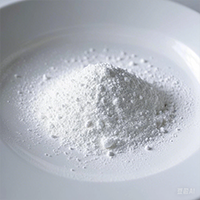
Introduction
As electronic devices shrink in size while growing in power, managing heat becomes a critical engineering hurdle. Electronic encapsulants, the protective compounds that shield delicate components from moisture, vibration, and thermal stress, rely heavily on fillers to provide thermal conductivity. Among the various choices, alumina (aluminum oxide) stands out as a staple. However, not all alumina is created equal. The choice between Spherical Alumina Powder and irregular (angular) alumina can make or break the performance of a high-end semiconductor package. This guide explores why the geometry of your filler matters, how it impacts manufacturing throughput, and why shifting toward a Fine particle size spherical morphology is often the key to next-generation thermal management.
Understanding the Core Differences: Shape, Surface, and Performance
When we talk about fillers in electronic encapsulants, we are essentially discussing how to pack as much functional material into a resin as possible without making the mixture unworkable. Irregular alumina is typically produced through traditional crushing and grinding. It features sharp edges, varying aspect ratios, and a rugged surface. In contrast, Spherical Alumina Powder is engineered through high-temperature flame melting or specialized chemical processes to achieve a near-perfect ball shape.
The shape directly influences the "packing limit." Imagine filling a bucket with jagged rocks versus marbles. You can fit more marbles into the same space because they roll over each other and settle into gaps efficiently. In the world of encapsulants, this translates to higher filler loading. Higher loading means better thermal performance, as there is more alumina and less resin to conduct heat.
Furthermore, the surface area of Industrial grade irregular alumina is significantly higher than its spherical counterpart. Sharp edges create more friction within the resin matrix. This friction raises the viscosity, making the material difficult to pour or inject. By switching to a Thermally conductive spherical filler, manufacturers can achieve 70% to 90% weight loading while maintaining a flowable consistency. This balance is the "holy grail" of encapsulant formulation.
Feature | Irregular Alumina | Spherical Alumina Powder |
Particle Shape | Angular, Jagged, Sharp | Smooth, Spherical, Uniform |
Surface Area | High (leads to high viscosity) | Low (allows high loading) |
Max Loading | Low to Moderate (~60%) | High (Up to 90%+) |
Wear on Equipment | High Abrasiveness | Low Abrasiveness |
Flowability | Poor | Excellent (Ball-bearing effect) |
The Impact of Filler Geometry on Thermal Conductivity
The primary reason we add fillers to encapsulants is to move heat away from chips. Thermal conductivity in a composite material depends on the formation of "heat paths." If the particles don't touch or aren't packed tightly, the heat must travel through the polymer resin, which is a terrible conductor.
Spherical Alumina Powder excels here because its shape allows for "maximum packing density." Engineers often use a blend of different sizes—large spheres and Fine particle size smaller spheres—to fill the interstitial voids. This creates a dense network where particles are in constant contact. Irregular particles, with their awkward shapes, often leave large "resin-rich" gaps that act as thermal insulators.
Moreover, the uniformity of Industrial grade spherical fillers ensures that thermal expansion is isotropic. When a device heats up, it expands. If the filler particles are jagged and oriented randomly, they can create internal stresses that lead to micro-cracking. Spheres distribute stress evenly in all directions. This reliability is why Spherical Alumina Powder is preferred for high-reliability automotive sensors and power modules where thermal cycling is frequent and intense.
Achieving High Loading Levels
To reach thermal conductivity levels above 3.0 W/m·K, you must push filler content to the limit. We find that irregular alumina hits a "viscosity wall" much earlier. Once the mixture becomes a thick paste, it cannot penetrate the tiny gaps between pins in a flip-chip BGA or a power discrete package. We use Spherical Alumina Powder specifically to bypass this wall, enabling ultra-high thermal paths without sacrificing the ability of the encapsulant to "underfill" or "overmold" complex geometries.
Viscosity and Flowability: The "Ball Bearing Effect"
In manufacturing, time is money. If an encapsulant takes too long to flow into a mold or under a die, throughput drops. Spherical Alumina Powder introduces what we call the "ball bearing effect." Because the particles are smooth and round, they roll past one another with minimal resistance.
This fluid behavior is critical for Precision polishing of the final production process. When the encapsulant has low viscosity despite high filler content, it can be processed at lower pressures. High-pressure injection can damage delicate gold bond wires—a phenomenon known as "wire sweep." Using a Moisture resistant spherical filler reduces the need for high pressure, thereby increasing the yield of functional devices.
Furthermore, the abrasive nature of irregular alumina can be a nightmare for dispensing equipment. Sharp edges grind away at stainless steel nozzles and pumps, leading to frequent downtime and contamination of the resin with metallic debris. Spherical Alumina Powder is much gentler on hardware. It preserves the life of your equipment and ensures that the Dielectric properties of the encapsulant aren't compromised by metal flakes worn off the machines.
Optimizing the Dispensing Process
Reduced Clogging: Smooth spheres are less likely to bridge and clog small dispense needles.
Stable Shelf Life: Spherical particles settle more predictably and are easier to re-disperse than interlocking irregular particles.
Faster Underfill: Capillary action pulls spherical-filled resins more quickly under large-area silicon dies.
Dielectric Integrity and Moisture Resistance
Electronic encapsulants aren't just thermal conductors; they are also electrical insulators. Any filler used must maintain high Dielectric strength to prevent short circuits. Impurities in low-quality fillers can act as conductive paths. Spherical Alumina Powder is often produced through high-purity melting processes that eliminate many of the ionic impurities found in standard ground alumina.
The surface of the filler also plays a role in Moisture resistant performance. Irregular particles have deep "canyons" and "cracks" on their surface where moisture can hide. During high-temperature soldering (reflow), this trapped moisture can turn to steam, causing the encapsulant to explode or delaminate—a failure known as "popcorning."
The smooth, sealed surface of a Fine particle size spherical particle offers nowhere for moisture to hide. When treated with silane coupling agents, Spherical Alumina Powder bonds more effectively to the resin matrix. This creates a tighter seal against the environment. We have seen that encapsulants using spherical fillers pass HAST (Highly Accelerated Stress Test) and biased humidity tests far more consistently than those using irregular fillers.
Maintaining Electrical Insulation
Low Ionic Content: Quality Industrial grade spherical alumina minimizes sodium and potassium ions that cause leakage currents.
Surface Treatment: The spherical shape allows for a more uniform coating of coupling agents, improving the interface between the inorganic filler and the organic polymer.
Void Reduction: Better flow means fewer air bubbles (voids) are trapped during encapsulation. Since air can ionize and lead to corona discharge, reducing voids is essential for high-voltage applications.
Precision Polishing and Surface Finish Requirements
Some electronic applications require the encapsulant surface to be perfectly flat or polished, especially in optical sensors or multi-die modules that need subsequent thinning. Spherical Alumina Powder plays a vital role in achieving a Precision polishing finish.
When you grind or polish a composite filled with irregular alumina, the sharp particles tend to "pluck" out of the resin, leaving large pits. They can also scratch the surrounding resin or the delicate silicon die. Spheres, however, wear down more uniformly. Because they lack sharp "anchor points," they don't cause the same level of surface tearing.
This is particularly important for Industrial grade applications where the encapsulant serves as a substrate for further lithography or thin-film deposition. A smoother surface leads to better adhesion of subsequent layers and fewer defects in the final device. If your process involves mechanical thinning or CMP (Chemical Mechanical Planarization), switching to a Fine particle size spherical filler is almost always a requirement.
Cost-Benefit Analysis: Is Spherical Alumina Worth the Premium?
One cannot ignore the fact that Spherical Alumina Powder is more expensive to produce than irregular alumina. The energy required to melt alumina at temperatures exceeding 2,000°C is substantial. However, looking only at the "price per kilogram" is a mistake. We must look at the "total cost of ownership" in the device assembly process.
The benefits of using Spherical Alumina Powder often outweigh the initial cost through several mechanisms:
Higher Yields: Fewer broken wires and fewer "popcorn" failures mean more salable units per wafer.
Lower Maintenance: Dispensing pumps and nozzles last 3-5 times longer when using non-abrasive spherical fillers.
Better Performance: If you can increase thermal conductivity by 50% by moving from irregular to spherical fillers, you might be able to use a smaller, cheaper heat sink or run the chip faster, adding market value to the end product.
Process Speed: Faster flow speeds and shorter cure cycles (due to better heat distribution) increase factory capacity.
When to Stick with Irregular Alumina?
While we advocate for Spherical Alumina Powder in high-performance applications, irregular alumina still has its place. If your thermal requirements are low (<1.5 W/m·K) and your package geometry is large and simple, the cost savings of Industrial grade irregular alumina might be justified. It is often used as a "diluent" in larger castings where flow isn't a tight constraint.
Selecting the Right Grade: Fine Particle Size and Blending Strategies
Choosing the best filler isn't just about picking "spherical" over "irregular." It's about the "Particle Size Distribution" (PSD). Most advanced encapsulants use a multimodal blend.
By mixing a "Large" Spherical Alumina Powder (e.g., 20-40 microns) with a Fine particle size grade (e.g., 2-5 microns), we can maximize the density. The small spheres fit perfectly into the gaps between the large spheres. This is often referred to as "Apollonian packing."
Blend Type | Component A | Component B | Resulting Property |
Monomodal | 10μm Spherical | None | Moderate viscosity, easy handling |
Bimodal | 30μm Spherical | 3μm Spherical | High loading, high thermal conductivity |
Trimodal | 50μm Spherical | 10μm Spherical | 0.5μm Fine particle size |
We often recommend adding a Thermally conductive surface treatment to these blends to ensure they don't settle during storage. Consistency in the PSD is what separates a premium Industrial grade supplier from the rest. If the "fine" fraction is too small, the surface area sky-rockets and viscosity returns. If it's too large, it won't fit in the gaps. Precision is everything.
Conclusion
In the battle of "Spherical vs Irregular Alumina," the winner is clear for any high-performance electronic application. While irregular alumina is a cost-effective choice for basic tasks, Spherical Alumina Powder is the essential enabler for high-density, high-power electronics. Its ability to provide a "ball-bearing" flow, ultra-high thermal loading, and superior Dielectric protection makes it the gold standard for modern encapsulants.
By choosing a Fine particle size spherical filler, manufacturers can ensure their devices run cooler, last longer, and are produced with higher yields. Whether you are designing underfills for mobile processors or potting compounds for electric vehicle inverters, the geometry of your alumina filler is the foundation of your thermal management strategy.
About Shengtian: Our Manufacturing Excellence
At our Shengtian factory, we take pride in being a leading force in the advanced materials industry. We have invested heavily in state-of-the-art flame-spheroidization technology, allowing us to produce Spherical Alumina Powder with world-class sphericity and purity. Our facility isn't just a production line; it is a center of technical expertise where we rigorously test every batch for particle size consistency, Moisture resistant properties, and thermal performance. We understand that in the semiconductor world, even a minor deviation can lead to catastrophic failure. That is why we maintain strict ISO-certified quality controls. Our strength lies in our ability to customize particle size distributions for our clients' specific resin systems, ensuring that when you choose Shengtian, you are getting a partner dedicated to your manufacturing success and the reliability of your electronic components.
FAQ
Q1: Why is spherical alumina better for thermal conductivity than irregular alumina?A: Spherical Alumina Powder allows for higher packing density. When particles are packed tighter, there are more contact points for heat to travel through, significantly increasing the Thermally conductive efficiency of the encapsulant compared to the jagged, gapped structure of irregular fillers.
Q2: Does the shape of the alumina affect the electrical properties of the encapsulant?A: Yes. Spherical particles typically have a smoother surface and lower ionic impurity levels due to their manufacturing process. This enhances the Dielectric strength and reduces the risk of electrical leakage or breakdown under high voltage.
Q3: Can I mix irregular and spherical alumina to save costs?A: Yes, many companies use a "hybrid" approach. However, even a small amount of irregular alumina can significantly increase viscosity. For high-end applications like underfills, a 100% Spherical Alumina Powder formulation is usually required to maintain flow.
Q4: Is spherical alumina abrasive to my equipment?A: No, it is much less abrasive. Because it lacks sharp edges, it doesn't "sand down" your dispensing needles and pumps. This is a major advantage for Industrial grade production lines looking to reduce downtime.
Q5: How do I choose the right particle size for my encapsulant?A: It depends on your "bond line thickness" or the gap you need to fill. A general rule is that the largest particle should be no more than 1/3 the size of the smallest gap. Using a Fine particle size grade helps in reaching tight spaces between delicate components.


