Introduction
The electronics industry is moving faster than ever. As high-frequency communication like 5G and high-speed computing become the norm, the materials inside our devices must evolve. Copper Clad Laminates (CCL) serve as the foundation of printed circuit boards (PCBs). Traditionally, these relied on halogenated flame retardants. However, environmental regulations and the need for better signal integrity have pushed manufacturers toward halogen-free solutions.
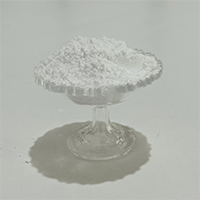
Among all candidates, Aluminum Hydroxide Powder stands out as the superior choice. It isn't just a basic additive; it is a multi-functional filler that manages heat, prevents fire, and maintains electrical performance. In this deep dive, we will explore why Ultra-fine Aluminum Hydroxide Powder has become the industry standard for next-generation CCL applications and how it solves the complex puzzles of modern electronics manufacturing.
The Critical Role of Aluminum Hydroxide Powder in Halogen-Free CCL Systems
When we talk about next-generation CCL, we are discussing materials that must survive intense heat while remaining environmentally friendly. Flame retardant Aluminum Hydroxide Powder (ATH) provides a unique endothermic decomposition mechanism. When temperatures rise during a fire or a soldering process, it releases water vapor. This process cools the substrate and dilutes flammable gases.
Unlike phosphorus-based retardants that can sometimes affect the mechanical strength of the resin, Industrial grade Aluminum Hydroxide Powder integrates seamlessly into epoxy resin systems. It serves a dual purpose: it displaces expensive resin, lowering costs, and it provides the necessary fire safety ratings (UL94 V-0) required for consumer electronics.
Property | Benefit for CCL |
Endothermic Decomposition | Absorbs heat, preventing rapid ignition. |
Water Vapor Release | Dilutes oxygen and creates a protective barrier. |
Smoke Suppression | Reduces the toxicity of fumes during combustion. |
Cost-Effectiveness | Provides high performance at a lower price point than organic fillers. |
Manufacturers prefer High purity Aluminum Hydroxide Powder because it minimizes impurities that could cause electrical failure. In high-density interconnect (HDI) boards, even tiny particles of metal or conductive ions can lead to short circuits. By using a Low sodium Aluminum Hydroxide Powder, designers ensure that the board remains stable over its entire lifecycle, even in humid environments.
Achieving Superior Thermal Management and Dimensional Stability
One of the biggest hurdles for next-gen CCL is thermal expansion. If the components on a PCB expand at different rates than the board itself, the solder joints will crack. Aluminum Hydroxide Powder helps bridge this gap. It has a relatively low coefficient of thermal expansion (CTE) compared to the base resins.
By loading the resin with Ultra-fine Aluminum Hydroxide Powder, we can significantly reduce the overall CTE of the laminate. This ensures that the board stays flat and the internal copper traces remain intact during thermal cycling.
Enhancing Heat Dissipation
Modern chips generate a massive amount of heat. While ATH is primarily known for flame retardancy, it also contributes to the thermal conductivity of the composite. Industrial grade Aluminum Hydroxide Powder helps heat move away from the sensitive components more efficiently than an unfilled resin would.
Improving Rigidity and Strength
They find that adding the right amount of filler improves the "modulus" or stiffness of the board. A stiffer board is easier to handle during automated assembly. However, the particle size must be perfect. If the particles are too large, they create stress points. This is why Ultra-fine Aluminum Hydroxide Powder is prioritized; its small particle size allows for high loading levels without making the material brittle.
Why Particle Size and Purity Define Next-Gen Performance
In the world of CCL, not all fillers are created equal. The move toward thinner boards and smaller "vias" (the holes that connect layers) means that the filler particles must be microscopic. This is where Ultra-fine Aluminum Hydroxide Powder becomes non-negotiable.
The Impact of Ultra-fine Particle Distribution
When particles are measured in sub-micron levels, they distribute evenly throughout the resin. This prevents "clumping," which can lead to uneven drilling or laser-cutting. If you are using a laser to drill tiny holes in a PCB, a large chunk of filler will deflect the beam. High purity Aluminum Hydroxide Powder with a tight particle size distribution ensures the laser passes through the material predictably.
The Importance of Low Sodium Content
Sodium is a conductive ion. In the presence of moisture, sodium ions can migrate and cause "Electrochemical Migration" (ECM). This is the silent killer of high-end electronics. Low sodium Aluminum Hydroxide Powder is specifically processed to keep these ionic impurities to an absolute minimum.
We often see that lower-quality fillers lead to high "dissipation factors" (Df). In simple terms, high Df means the board "steals" signal energy, turning it into heat. High purity Aluminum Hydroxide Powder helps keep the Df low, which is essential for 5G signals that operate at high frequencies.
Balancing Electrical Insulation and Dielectric Properties
The primary job of a CCL is to keep signals separated. As we push more data through copper lines, the dielectric constant (Dk) and dissipation factor (Df) of the materials become critical. Flame retardant Aluminum Hydroxide Powder is an excellent insulator.
Unlike some metallic fillers or carbon-based materials, Aluminum Hydroxide Powder does not conduct electricity. It maintains the high resistivity of the epoxy resin. In fact, it often improves the tracking resistance (CTI - Comparative Tracking Index) of the laminate.
Optimizing the Dk/Df Ratio
For next-generation high-speed laminates, engineers want a low Dk. While ATH has a slightly higher Dk than the resin, its impact is manageable because of its stability.
Uniformity: Because it is Ultra-fine, the Dk remains consistent across the entire board surface.
Frequency Stability: The electrical properties of High purity Aluminum Hydroxide Powder stay stable even as the signal frequency increases from 1 GHz to 28 GHz (5G bands).
Moisture Resistance: ATH does not readily absorb water if treated correctly. Water has a very high Dk (~80), so any moisture absorption would ruin the board's electrical performance.
By using Low sodium Aluminum Hydroxide Powder, manufacturers can produce boards that meet the strict signal integrity requirements of the telecommunications industry without sacrificing fire safety.
Sustainability and the Shift to Halogen-Free Chemistry
Global regulations like RoHS (Restriction of Hazardous Substances) and REACH have changed the game. Halogenated flame retardants (like Brominated Flame Retardants or BFRs) release toxic dioxins and furans when burned. They are being phased out rapidly. Aluminum Hydroxide Powder is the ultimate "green" alternative.
Why It is the Leading Halogen-Free Solution
It is abundant, non-toxic, and chemically stable. When it "extinguishes" a fire, it only produces water and alumina ($Al_2O_3$), which are both harmless. This makes it much safer for workers in the manufacturing plant and for consumers who use the final products.
Eco-friendly: No toxic gas release.
Recyclable: Boards filled with ATH are easier to process at the end of their life.
Regulatory Compliance: Using Industrial grade Aluminum Hydroxide Powder guarantees that the CCL meets all international environmental standards.
Furthermore, we see that Aluminum Hydroxide Powder is more sustainable from a supply chain perspective. It is a byproduct of the aluminum refining process (Bayer process), making it a circular economy success story. As companies aim for "Net Zero" goals, switching to High purity Aluminum Hydroxide Powder is an easy win for their ESG (Environmental, Social, and Governance) scores.
Manufacturing Efficiency: Dispersion and Resin Compatibility
A filler is only as good as its ability to mix with the resin. If the Aluminum Hydroxide Powder settles at the bottom of the mixing tank, the resulting CCL will be inconsistent. This causes "hot spots" where fire protection is weak and "cold spots" where electrical insulation is poor.
Surface Modification Techniques
To solve this, Ultra-fine Aluminum Hydroxide Powder is often surface-treated with silanes or other coupling agents. These treatments act like a bridge between the inorganic powder and the organic resin.
Better Wetting: The resin "hugs" the particle, leaving no air gaps.
Lower Viscosity: Surface treatment allows for higher loading levels (up to 50-60% by weight) without making the resin too thick to pour.
Enhanced Adhesion: It improves the bond strength between the resin and the copper foil (Peel Strength).
Processing in the Factory
When using Industrial grade Aluminum Hydroxide Powder, manufacturers benefit from its predictable behavior. It doesn't require specialized high-shear mixing equipment if the particle size is controlled. It flows well through the impregnation machines where the glass cloth is soaked in resin. This high level of processability reduces scrap rates and increases the "yield" of usable CCL sheets.
Comparative Analysis: ATH vs. Other Halogen-Free Fillers
To understand why Aluminum Hydroxide Powder is the leader, we must compare it to its rivals, such as Magnesium Hydroxide ($Mg(OH)_2$) or Silica ($SiO_2$).
Feature | Aluminum Hydroxide (ATH) | Magnesium Hydroxide (MDH) | Silica ($SiO_2$) |
Decomposition Temp | ~$200^\circ C$(Ideal for Epoxy) | ~$330^\circ C$(Too high for some) | None (Not a flame retardant) |
Flame Retardancy | Excellent (Chemical + Physical) | Good | Poor (Physical only) |
Hardness | Low (Saves drill bits) | Low | High (Wears out drills fast) |
Cost | Lowest | Medium | High |
Why ATH Wins for CCL:Most epoxy resins used in CCL cure at temperatures around$170^\circ C - 190^\circ C$. Aluminum Hydroxide Powder starts to decompose at$200^\circ C$. This is the "Goldilocks zone." It remains stable during the manufacturing of the board but activates immediately if a fire starts. Magnesium Hydroxide stays stable for too long, meaning the board might melt before the filler starts to help. Silica is great for CTE but offers zero fire protection, so you would still need another additive. Flame retardant Aluminum Hydroxide Powder is the best all-in-one solution.
Solving the Challenges of High-Density Interconnect (HDI) Boards
As smartphones get thinner, the space between circuits shrinks. In HDI boards, we use "microvias" that are smaller than a human hair. Ultra-fine Aluminum Hydroxide Powder is essential here because large particles would physically block these paths or cause "voids" during the lamination process.
Laser Drillability
We have found that High purity Aluminum Hydroxide Powder reflects less laser energy than other minerals. This allows for faster drilling speeds and cleaner hole walls. Clean hole walls are vital for the electroplating process that follows, ensuring a reliable connection between board layers.
Chemical Resistance
During the PCB manufacturing process, the boards are dipped in various acids and bases (etching, stripping, plating). Industrial grade Aluminum Hydroxide Powder is chemically resistant enough to withstand these baths without leaching out of the resin. This prevents "pitting" on the surface of the board, which could otherwise lead to copper peeling or signal distortion.
By using Low sodium Aluminum Hydroxide Powder, the manufacturer also ensures that the chemicals used in the plating process don't react with impurities in the filler, which could lead to contamination of the expensive plating tanks.
Conclusion
The transition to halogen-free, high-speed, and high-reliability electronics is non-negotiable. As the backbone of this transition, Copper Clad Laminates require fillers that do more than just take up space. Aluminum Hydroxide Powder has proven to be the most versatile, cost-effective, and high-performing option available today.
From the Ultra-fine particle sizes that allow for precise laser drilling to the Low sodium variants that guarantee long-term electrical reliability, this material addresses every pain point of next-generation CCL design. It provides a "green" pathway to fire safety while enhancing the physical and thermal properties of the board. As 5G and AI hardware continue to evolve, the demand for High purity Aluminum Hydroxide Powder will only grow, cementing its place as the leading halogen-free filler in the industry.
FAQ
Q1: Can I use standard industrial grade ATH for high-frequency boards?While it works for basic applications, we recommend High purity Aluminum Hydroxide Powder for high-frequency boards. Standard grades may contain traces of iron or sodium that can interfere with sensitive signals at 5G frequencies.
Q2: How does Aluminum Hydroxide Powder affect the "Peel Strength" of copper?When used as an Ultra-fine filler with proper surface treatment, it actually maintains or improves peel strength. It creates a more stable interface between the resin and the copper foil compared to large, untreated particles.
Q3: Is Aluminum Hydroxide Powder abrasive to CNC drills?No, one of its best features is its low Mohs hardness. Compared to silica, Aluminum Hydroxide Powder is much softer, which significantly extends the life of the expensive carbide drill bits used in PCB shops.
Q4: What is the typical loading level of ATH in a halogen-free CCL?It varies, but typically manufacturers use between 30% and 55% by weight. Achieving these high loads requires Ultra-fine Aluminum Hydroxide Powder to ensure the resin remains flowable.
About Shengtian: Our Commitment to Quality
I am proud to share that we at Shengtian operate a state-of-the-art factory dedicated to the precision manufacturing of advanced mineral fillers. Our facility is equipped with the latest grinding and classification technology, allowing us to produce Ultra-fine Aluminum Hydroxide Powder with unmatched consistency. We understand that in the CCL industry, purity is everything. That is why our production lines include rigorous purification steps to deliver Low sodium Aluminum Hydroxide Powder that meets the demanding standards of the world's leading electronics manufacturers.
With years of expertise in surface modification and particle size control, our team at the Shengtian factory works tirelessly to ensure every batch of High purity Aluminum Hydroxide Powder we ship provides the thermal stability and electrical insulation our partners need. We don't just supply powder; we provide the foundational reliability that makes next-generation technology possible. Whether you need Industrial grade Aluminum Hydroxide Powder for general fire safety or specialized grades for high-speed laminates, our strength lies in our ability to customize solutions that drive your innovation forward.


