Introduction
In the rapidly evolving world of high-frequency and high-speed electronics, the materials supporting our circuits must be more than just structural. The Copper Clad Laminate (CCL) serves as the backbone of nearly every electronic device, from your smartphone to massive data center servers. As these devices get smaller and more powerful, the thermal and safety demands placed on them skyrocket. This is where Aluminum Hydroxide Powder steps in as a silent hero. Often overlooked by those outside the chemical engineering field, this mineral filler is fundamental to achieving the flame retardancy, thermal stability, and electrical insulation required for modern PCBs. In this guide, we will dive deep into why Flame retardant Aluminum Hydroxide Powder is indispensable for high-performance CCL manufacturing and how it solves the most pressing challenges in the industry.
The Fundamentals of Aluminum Hydroxide Powder in CCL Systems
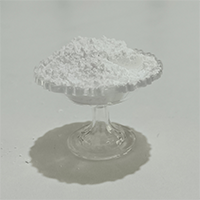
To understand the impact of this material, we first need to look at what it actually is. Industrial grade Aluminum Hydroxide Powder, also known as ATH (Alumina Trihydrate), is a non-toxic, halogen-free inorganic filler. Manufacturers prefer it because it performs three roles at once: it fills space, adds fire resistance, and improves smoke suppression. When we incorporate High purity Aluminum Hydroxide Powder into the epoxy resin matrix of a laminate, it creates a composite that can withstand the intense heat of lead-free soldering processes.
The magic happens at approximately 200°C. At this temperature, the Aluminum Hydroxide Powder begins to decompose endothermically. It releases water vapor, which dilutes any flammable gases and cools the surface of the laminate. Unlike halogenated flame retardants that release toxic fumes, this mineral filler is environmentally friendly. This shift toward "green" electronics has made Low sodium Aluminum Hydroxide Powder a staple in international supply chains. We see it used not just for its chemical properties, but for its ability to maintain the structural integrity of the copper-to-resin bond.
Property | Impact on CCL | Benefit |
Endothermic Decomposition | Heat Absorption | Prevents Resin Ignition |
Water Vapor Release | Gas Dilution | Reduces Smoke Toxicity |
Inorganic Structure | Dimensional Stability | Reduces Thermal Expansion |
Low Abrasivity | Tool Longevity | Lowers Drill Bit Wear |
Enhancing Thermal Conductivity and Heat Resistance
Heat is the enemy of electronic longevity. As components pack closer together, the CCL must act as a heat sink. While the resin itself is a poor conductor of heat, adding Ultra-fine Aluminum Hydroxide Powder significantly boosts the overall thermal conductivity of the board. By optimizing the packing density of the particles, we create a thermal bridge that allows heat to escape from the copper layers more efficiently.
Furthermore, High purity Aluminum Hydroxide Powder ensures that the laminate remains stable during the thermal cycling that occurs during manufacturing. If the filler contains impurities, it can lead to "popcorning" or delamination when the board hits the reflow oven. We use Low sodium Aluminum Hydroxide Powder specifically to prevent these failures. Sodium ions are notorious for attracting moisture; if sodium levels are too high, the board will absorb water, leading to catastrophic failure during high-temperature processing. High-quality ATH keeps the moisture absorption rate below 0.2%, which is critical for reliability.
The Science of Thermal Bridges
When we mix Aluminum Hydroxide Powder into the resin, the particle size distribution matters. If the particles are all the same size, they leave gaps. By using a blend that includes Ultra-fine Aluminum Hydroxide Powder, the smaller particles fill the voids between larger ones. This maximizes the contact points, creating a more efficient path for heat to travel. This doesn't just keep the board cool; it reduces the Z-axis thermal expansion (CTE), which protects the delicate copper-plated through-holes from cracking.
Achieving Halogen-Free Flame Retardancy (HFFR)
Safety regulations like UL 94 V-0 are non-negotiable in the electronics industry. Historically, manufacturers used brominated flame retardants, but these are being phased out due to environmental concerns. Flame retardant Aluminum Hydroxide Powder has become the primary replacement. Its ability to achieve high levels of fire resistance without producing corrosive or toxic smoke is its greatest strength.
When a fire starts, the Aluminum Hydroxide Powder acts as a physical barrier. The alumina (Al2O3) residue left behind after dehydration forms a "char" layer. This layer insulates the underlying resin from oxygen and further heat. To achieve a V-0 rating in thin laminates, the loading levels of Industrial grade Aluminum Hydroxide Powder can be quite high, often exceeding 50% by weight. This is why the quality of the powder is so vital—if you add that much filler, it cannot interfere with the other mechanical properties of the board.
Mechanism 1: Heat absorption via endothermic reaction.
Mechanism 2: Dilution of oxygen by steam release.
Mechanism 3: Formation of a protective Al2O3 shield.
Improving Electrical Insulation and Dielectric Performance
In high-speed data transmission, the Dielectric Constant (Dk) and Dissipation Factor (Df) are the most critical metrics. We need the signal to move through the copper traces without losing energy or slowing down due to the surrounding laminate. Low sodium Aluminum Hydroxide Powder plays a huge role here. Sodium and other ionic impurities increase the conductivity of the resin matrix, which is exactly what you don't want.
By using High purity Aluminum Hydroxide Powder, manufacturers can keep the Dk and Df stable across a wide range of frequencies. It provides excellent insulation resistance even in humid environments. Because Ultra-fine Aluminum Hydroxide Powder can be dispersed so evenly, it prevents "hot spots" of high dielectric loss, ensuring that signal integrity is maintained from one side of the PCB to the other.
Why Particle Uniformity Matters for Dk/Df
Homogeneity: Even distribution of Aluminum Hydroxide Powder ensures consistent dielectric properties across the entire panel.
Surface Smoothness: Smaller particles mean a smoother surface for the copper foil to bond to, which reduces skin effect losses at high frequencies.
Low Moisture Pick-up: Low sodium variants ensure the dielectric properties don't degrade when the board is exposed to humidity.
Optimizing Processability and Drilling Efficiency
If a filler is too hard, it destroys the drill bits used to create the thousands of tiny holes in a PCB. Compared to fillers like silica, Industrial grade Aluminum Hydroxide Powder is relatively soft (Mohs hardness of 2.5 to 3). This makes it much easier on the manufacturing equipment. It allows for faster drilling speeds and longer tool life, which directly translates to lower production costs.
However, "softness" isn't the only factor. The rheology of the resin mix changes when you add Aluminum Hydroxide Powder. If the powder isn't treated correctly, the resin becomes too thick to flow, causing "voids" in the laminate. We solve this by using surface-treated Ultra-fine Aluminum Hydroxide Powder. Coating the particles with silanes or other coupling agents makes them "slippery" within the resin, allowing for high filler loading without sacrificing the flow characteristics needed for vacuum pressing.
Benefit 1: Reduced drill bit breakage and replacement costs.
Benefit 2: Cleaner hole walls for better through-hole plating.
Benefit 3: Improved resin flow during lamination, reducing scrap rates.
Addressing the Challenges of High Filler Loading
As we push for higher fire safety and better thermal properties, we have to add more Aluminum Hydroxide Powder. But adding too much can make the laminate brittle. The challenge is finding the "sweet spot" where we get all the benefits of the Flame retardant Aluminum Hydroxide Powder without making the board crack during assembly.
To solve this, we look at particle shape and surface area. Ultra-fine Aluminum Hydroxide Powder with a spherical or optimized morphology provides the best balance. It allows for high loading while maintaining the peel strength of the copper foil. If the bonding between the resin and the Aluminum Hydroxide Powder is weak, the copper will peel off easily. This is why surface treatment is more than just an add-on; it is a necessity for high-performance boards used in automotive or aerospace applications.
Loading Level | Benefit | Potential Trade-off | Solution |
< 30% | Easy processing | Lower flame retardancy | Blend with other synergists |
30% - 50% | Balanced performance | Increased viscosity | Use Ultra-fine grades |
> 50% | Maximum fire safety | Brittleness/Poor bonding | Advanced surface coupling |
The Impact of Purity on Long-term Reliability
In the world of electronics, reliability is measured in decades. One of the biggest threats to a PCB is Conductive Anodic Filament (CAF) growth. This happens when metal filaments grow through the laminate, causing a short circuit. Research shows that ionic impurities in the filler, such as sodium or magnesium, can accelerate CAF. This is exactly why Low sodium Aluminum Hydroxide Powder is mandatory for mission-critical electronics.
By insisting on High purity Aluminum Hydroxide Powder, we ensure that the insulation between high-voltage traces remains intact for the life of the product. These Industrial grade materials undergo rigorous washing and filtration processes to remove any trace minerals that could conduct electricity. When you choose a high-quality Aluminum Hydroxide Powder, you aren't just buying a filler; you are buying insurance against field failures and costly recalls.
Reliability Checklist for CCL Fillers
Sodium Content: Must be < 0.01% for high-speed applications.
Moisture Content: Should be < 0.3% at the point of use.
Particle Size (D50): Should range from 1.0μm to 5.0μm for standard boards, and much smaller for Ultra-fine requirements.
pH Value: Must be neutral to avoid reacting with the epoxy catalysts.
Conclusion
The evolution of Copper Clad Laminates is a story of material science, and Aluminum Hydroxide Powder is one of its most important chapters. From providing essential Flame retardant properties to enhancing thermal conductivity and ensuring electrical reliability, this versatile mineral is the key to building better, safer, and faster electronics. As the industry moves toward even higher frequencies and more compact designs, the demand for High purity, Low sodium, and Ultra-fine Aluminum Hydroxide Powder will only grow. By understanding the intricate role this powder plays, manufacturers can optimize their formulations to meet the challenges of tomorrow's technology.
At our Shengtian factory, we have spent years perfecting the art of mineral processing. We understand that for your CCL production, consistency is everything. Our facility is equipped with state-of-the-art grinding and classification systems specifically designed to produce High purity Aluminum Hydroxide Powder that meets the strictest international standards. We take pride in our ability to control particle size distributions with extreme precision, ensuring that our Ultra-fine products integrate seamlessly into your resin systems. When you work with us, you are partnering with a team that values technical excellence and reliability as much as you do. We don't just supply raw materials; we provide the foundational quality that makes your high-performance laminates possible.
FAQ
1. Why is Aluminum Hydroxide Powder preferred over other flame retardants?
It is preferred because it is halogen-free and environmentally friendly. Unlike older chemicals, Flame retardant Aluminum Hydroxide Powder does not release toxic or corrosive gases when exposed to fire. It also provides a cooling effect through its endothermic decomposition.
2. How does "Low sodium" status affect PCB performance?
Sodium is a conductor. If your Aluminum Hydroxide Powder has high sodium levels, it can lead to electrical leakage or the growth of conductive filaments (CAF), which cause the board to short-circuit over time. Low sodium versions are essential for reliability.
3. Can I use standard Industrial grade Aluminum Hydroxide Powder for high-frequency boards?
While standard Industrial grade is fine for basic electronics, high-frequency boards usually require High purity and Ultra-fine versions. These ensure that the signal isn't distorted and that the dielectric constant remains stable across the board.
4. What is the typical particle size for CCL applications?
Most manufacturers use a D50 (median particle size) between 1 and 5 microns. However, for thin cores or high-density interconnect (HDI) boards, Ultra-fine Aluminum Hydroxide Powder with sub-micron particles is often required to ensure even distribution.
5. Does adding this powder make the board harder to drill?
Actually, no. One of the reasons we love Aluminum Hydroxide Powder is its low hardness. It is much softer than silica, which means it causes less wear on your drill bits and allows for a more efficient manufacturing process.


