Sourcing the exact right raw materials often determines whether a manufacturing project succeeds or fails. You face a delicate balancing act every day. Finding the fine line between necessary technical specifications and unnecessary cost premiums remains a massive procurement challenge. Trace impurities dictate material performance. Even at the parts-per-million (PPM) level, unwanted elements can trigger catastrophic failures in highly sensitive applications like advanced semiconductor packaging. Conversely, over-speccing purity needlessly drives up production costs in standard industrial manufacturing. We must get this technical balance exactly right. This article provides a transparent, specification-driven framework for you. You will learn how to effectively evaluate and select the correct grade of fused silica powder. We will also explore the critical role of form factors in achieving your specific manufacturing outcomes.
Key Takeaways
- Purity dictates application and price: Trace element limits (Fe, Al, Ti, Na) segment the market into industrial, high-purity, and ultra-high-purity tiers.
- Morphology and sizing matter equally: The performance of micron fused silica powder relies heavily on its Particle Size Distribution (PSD) and shape (angular vs. spherical).
- Sourcing origins define the ceiling: Understanding the difference between naturally derived fused quartz and synthetically manufactured fused silica is critical for baseline purity expectations.
- Supplier vetting requires data: A reliable OEM fused silica supplier must provide verifiable batch-to-batch consistency via ICP-MS testing and comprehensive Certificates of Analysis (CoA).
The Cost-to-Performance Reality of SiO2 Purity
Treating all silicon dioxide powders as generic commodities creates massive supply chain mismatches. Many procurement teams mistakenly view these raw materials as entirely interchangeable. This assumption routinely leads to costly manufacturing defects. It also severely inflates operational budgets. Understanding the economics of purity is your first step toward optimized purchasing.
Purity directly influences pricing at an exponential rate. Moving from 99.9% to 99.999% purity radically increases processing costs. Achieving 99.999% requires intense purification methods. Manufacturers employ advanced acid leaching to strip heavy metals from the raw sand. They use rigorous magnetic separation processes to remove iron particulate. Additional high-temperature thermal treatments stabilize the final material. Every extra step consumes massive amounts of electricity and labor. These costs pass directly to the buyer.
Your goal is remarkably clear. Procurement and engineering departments must align the maximum allowable trace metal content with the product's baseline requirements. You must manage alkali content strictly based on application needs. This strategic alignment helps optimize your bill of materials. Do not pay for purity you do not actually need. Match the silica grade to your precise performance limits. If a part only needs structural integrity, do not buy optical-grade powder.
Mapping Purity Grades to Manufacturing Outcomes
Different industries require vastly different purity profiles. We segment the global market into three primary tiers based on parts-per-million trace elements.
Standard / Industrial Grade (99.9% - 99.95% SiO2)
industrial fused silica accepts higher tolerances for trace impurities. You will typically find elevated levels of iron (Fe) and aluminum (Al) here. These trace elements do not significantly harm physical stability.
This tier perfectly suits heavy structural applications. Refractory materials utilize it for excellent thermal shock resistance. Investment casting shell building relies on its predictable dimensional stability during metal pouring. Technical ceramics also use this robust grade. In these heavy-duty applications, physical strength completely outweighs optical perfection. Electrical insulation matters very little here.
High-Purity Grade (99.99% - 99.995% SiO2)
This demanding tier enforces stringent impurity controls. Manufacturers place strict upper limits on alkali metals. Contaminants like sodium (Na), potassium (K), and lithium (Li) must remain exceptionally low. These elements easily conduct electricity. Their presence actively compromises insulating materials. Under electrical bias, these ions migrate and cause short circuits.
Therefore, high-purity fused silica acts as the absolute standard for demanding electronics. Epoxy molding compounds (EMCs) depend on it to protect delicate microchips. Copper-clad laminates require these exact electrical properties for printed circuit boards. Advanced structural adhesives also benefit from this highly consistent purity profile.
Ultra-High-Purity / Synthetic Grade (99.999%+ SiO2)
High-tech sectors demand a strict zero-defect requirement. Producers do not mine natural sand for this elite grade. Instead, they manufacture it via complex chemical precursors. Silicon tetrachloride (SiCl4) is a highly common starting point. This vapor-phase process completely eliminates natural mineral inclusions.
You need this tier for specialized photonics. Semiconductor wafers require flawless substrates to prevent yield loss. Optical fibers demand perfect light transmission without scattering. UV transmission and ultra-low thermal expansion remain strictly non-negotiable here. Even parts-per-billion (PPB) contamination can ruin these products.
| Purity Grade | Typical SiO2 Percentage | Key Impurity Constraints | Target Manufacturing Applications |
| Standard / Industrial | 99.90% - 99.95% | Higher tolerance for Fe and Al | Refractory bricks, investment casting molds |
| High-Purity | 99.99% - 99.995% | Strict limits on Na, K, Li (Alkali metals) | Epoxy molding compounds (EMCs), laminates |
| Ultra-High-Purity | > 99.999% | Zero natural mineral inclusions | Semiconductor substrates, specialized optics |
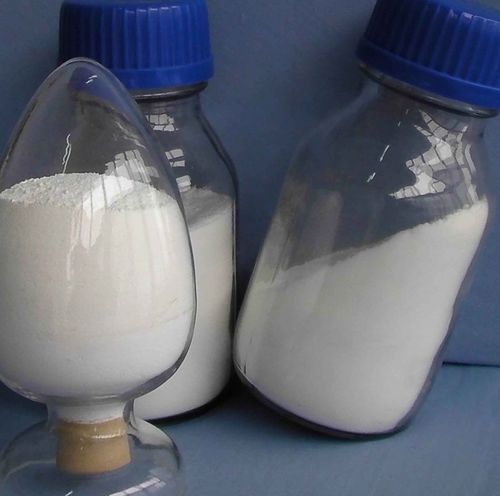
Fused Quartz vs. Fused Silica: Clearing the Procurement Confusion
Many buyers constantly assume these terms mean the exact same thing. This underlying assumption creates significant industry confusion. Using them interchangeably often leads to wildly incorrect quoting. Worse, it causes catastrophic material failures on your production line. Let us permanently clarify the critical differences.
The Fused Quartz Reality
Manufacturers create fused quartz by melting natural, high-purity quartz crystals. They process natural quartz sand in massive high-temperature furnaces. This traditional material delivers excellent thermal properties. It handles immense heat without cracking.
However, it inherently carries trace naturally occurring elements. You cannot easily strip out every atomic impurity from mined sand. Natural ore always contains residual aluminum or titanium. For many industrial uses, this poses absolutely no problem.
The Fused Silica Reality
The term generally refers to synthetic silica. Producers create it in a highly controlled, synthetic chemical environment. They utilize gas-phase oxidation or flame hydrolysis. This synthetic route offers superior optical transmission across broad wavelengths.
Most importantly, it boasts significantly lower metallic impurities than natural quartz. Because it starts from a purified gas rather than a rock, it eliminates natural contamination variables.
The Decision Matrix
How should you choose between them?
- Use fused quartz for high-temperature industrial scaling. It offers great financial value for robust thermal environments like foundries.
- Use synthetic fused silica for extreme precision. Optical lenses, deep-UV components, and deep-semiconductor applications absolutely require the synthetic route. Do not risk natural variations in these demanding fields.
Beyond Purity: Evaluating Micron Fused Silica Powder
Chemical purity only tells half the story. Physical characteristics heavily dictate your final product performance. When specifying micron fused silica powder, you must rigorously evaluate its structural traits.
Particle Size Distribution (PSD)
Particle size fundamentally alters material behavior during mixing and curing. You must clearly define your D10, D50, and D90 metrics with your supplier. These specific numbers represent the percentage of particles falling below a certain size threshold. For example, D50 represents the median particle size.
Why is this incredibly critical? PSD directly controls resin viscosity. A poor size distribution thickens polymers far too much. It prevents proper flow during complex molding operations. PSD also manages the coefficient of thermal expansion in composites. Tightly packed particles create a dimensionally stable matrix. This firmly prevents cracking during rapid temperature swings.
Morphology Selection
Particle shape matters just as much as precise sizing. The industry offers two primary shapes.
- Angular Powder: Manufacturers crush and mill raw silica blocks. This aggressive mechanical process creates sharp, irregular particle edges. Angular powder provides excellent mechanical bite. It binds exceptionally well in structural matrices. It also costs significantly less to produce. You should always select angular shapes for structural or abrasive applications.
- Spherical Powder: Producers melt angular particles in a specialized high-temperature plasma flame. Extreme surface tension pulls the molten silica into nearly perfect spheres. Spherical powder provides superior flowability in liquid resins. It allows for much higher filler loading capacity without increasing viscosity. It drastically reduces mechanical wear on expensive molding equipment. This specialized shape remains critical for advanced electronic packaging.
Moisture Content and Surface Treatment
Silica naturally absorbs ambient moisture from the air. Hidden water ruins sensitive resin curing processes. It causes voids and blistering in final parts. Proper surface treatment solves this common issue.
Manufacturers often apply specialized silane coupling agents. These complex chemicals permanently modify the silica surface. They significantly improve the dispersion of silica into organic polymer matrices. This prevents unwanted clumping. It ultimately enhances overall composite strength and moisture resistance.
How to Shortlist an OEM Fused Silica Supplier
Finding a highly reliable OEM fused silica supplier requires careful operational vetting. You must look far beyond simple pricing models. Evaluate their industrial capabilities and core quality systems.
Scalability vs. Specialization
First, assess their true production capacity. Does the supplier have the massive kiln capacity to handle large tonnage? Industrial uses require massive, highly consistent volumes delivered on time. Alternatively, are they merely a boutique lab-scale provider? Niche photonics might only require small, hyper-controlled batches. Always match their operational scale to your actual production forecast.
Quality Control and Traceability
You must demand solid evidence of batch-to-batch consistency. Do not simply trust generic specification sheets. A trustworthy supplier should actively provide Inductively Coupled Plasma Mass Spectrometry (ICP-MS) data. They should willingly offer this rigorous data for every single lot shipped. Strong traceability permanently prevents sudden manufacturing defects on your floor.
Supply Chain Security
Assess the deep geographic origin of their raw silica sand. Where exactly do they source their primary quartz? Furthermore, evaluate their vertical integration. Do they handle their own milling, melting, and classification? Some companies just re-sell bulk material from unknown plants. Fully integrated suppliers usually offer far better quality control and long-term pricing stability.
Next-Step Actions
Follow a strict, standardized sampling protocol before committing to large volumes.
- Request a standard 1kg sample for intensive internal lab testing.
- Ask for a detailed Certificate of Analysis (CoA) perfectly matching the sample lot.
- Request a Technical Data Sheet (TDS). Ensure it explicitly matches your required PSD and morphology.
- Perform a controlled pilot run in your own resin or composite system to verify real-world behavior.
Conclusion
Selecting the right powder demands careful, data-driven strategy. It requires a precise balancing act between cost and capability. You must carefully weigh acceptable impurity levels against particle morphology requirements. You also desperately need strong supplier reliability to ensure ongoing commercial success.
Avoid the incredibly common trap of over-specification. Buying ultra-high purity powder for a standard refractory application simply wastes your budget. We highly recommend working closely with technical sales teams. Match your specific D50 size and purity tier to your actual mixing equipment. Align the technical specs entirely with your end-user demands.
Do you need specialized help optimizing your material selection? Contact your engineering team today for a comprehensive specification review. They can confidently help you request a custom formulation quote tailored perfectly to your manufacturing line.
FAQ
Q: What drives the pricing of high-purity fused silica?
A: Three main factors dictate cost. Raw material sourcing heavily impacts price, especially when using expensive chemical precursors for synthetic variants. Purification steps also add immense cost. Advanced acid washing and calcination require significant processing time. Finally, the energy-intensive plasma spheroidization process drastically drives up the price for perfectly spherical powders.
Q: Why is the coefficient of thermal expansion (CTE) so low in fused silica?
A: The unique structural arrangement provides exceptional thermal stability. It features a three-dimensional amorphous network of highly bonded silicon and oxygen atoms. This random, non-crystalline structure absorbs thermal energy efficiently. It expands with almost zero overall volume change. This unique property makes it absolutely ideal for high-heat electronics.
Q: How should micron fused silica powder be stored?
A: You must store it in climate-controlled indoor environments. Maintain exceptionally low-humidity conditions at all times. Silica readily absorbs ambient moisture from the air. This hidden moisture severely ruins resin curing processes during manufacturing. Poor storage also leads to severe particle agglomeration, which destroys powder flowability.


