Introduction
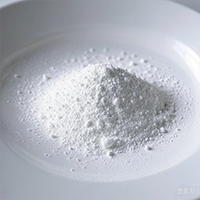
As electronic devices shrink in size while growing in power density, heat has become the primary enemy of hardware longevity. High-power components like IGBTs, CPU processors, and automotive battery modules generate intense thermal energy during operation. Without efficient dissipation, this heat causes "thermal runaway," leading to permanent circuit damage or shortened service cycles. Spherical Alumina Powder has emerged as the gold standard for thermal interface materials (TIMs) and potting compounds. Its unique geometry and chemical stability allow it to bridge the gap between heat sources and heat sinks more effectively than irregular fillers. By optimizing heat flow, it directly reduces the operational strain on delicate components. In this guide, we explore how this advanced material acts as a silent guardian for the next generation of high-power electronics.
Why Thermal Management Dictates Electronic Longevity
Thermal management is not just about keeping a device cool; it is about maintaining a stable environment for chemical and physical processes to occur without degradation. Most high-power electronic devices rely on semiconductors that are highly sensitive to temperature fluctuations. When temperatures rise beyond the design limit, the resistance within the circuits increases, causing even more heat—a vicious cycle that eventually leads to hardware failure.
The lifespan of a capacitor or a power transistor often follows the "Arrhenius Law," which suggests that for every 10°C increase in operating temperature, the component’s life expectancy is halved. This makes the choice of filler in thermal pads and gap fillers critical. Using Thermally conductive Spherical Alumina Powder ensures that heat moves away from the junction quickly. Unlike traditional fillers, its shape allows for high loading levels without making the material too stiff to apply.
Component Type | Typical Failure Cause | Impact of Poor Thermal Management |
Power IGBTs | Solder fatigue | Crack formation due to thermal cycling |
LED Modules | Phosphor degradation | Color shifting and brightness loss |
EV Batteries | Lithium plating | Reduced capacity and fire risk |
Microprocessors | Electromigration | Permanent circuit "opens" or shorts |
We see that longevity is a direct function of thermal conductivity. When we integrate Industrial grade Spherical Alumina Powder into the system, we effectively lower the "delta T" (temperature difference) across the device interface. This keeps the internal chemistry stable and the physical structures intact for thousands of extra operating hours.
The Geometric Advantage of Spherical Alumina Powder
The shape of a filler particle might seem trivial, but in the world of high-power electronics, geometry is everything. Most traditional alumina is angular or irregular. These jagged shapes create high viscosity when mixed into silicone or epoxy resins, limiting how much filler you can actually add. If you can’t add enough filler, the thermal conductivity stays low.
Spherical Alumina Powder changes this dynamic entirely. Because the particles are perfectly round, they act like miniature ball bearings. This "ball-bearing effect" reduces internal friction during the mixing process. It allows manufacturers to achieve a much higher "packing density." In simple terms, you can fit more alumina into the same amount of resin.
Achieving the Percolation Threshold
To move heat, particles must touch each other or be very close. This is called the percolation threshold.
Irregular Fillers: They bridge poorly and create air pockets (voids). Air is an insulator, which kills thermal performance.
Spherical Fillers: They pack tightly. Using a Fine particle size distribution allows smaller spheres to fill the gaps between larger ones.
When we use a Moisture resistant Spherical Alumina Powder, we ensure that this tight packing remains stable even in humid environments. Water absorption can cause swelling or chemical shifts in the resin, which would otherwise push the thermal particles apart and break the heat path. By maintaining the physical contact between spheres, the device stays cool, and its lifespan remains extended.
Enhancing Dielectric Strength and Electrical Reliability
A major challenge in high-power devices is the risk of electrical breakdown. Materials must be thermally conductive but also electrically insulating. You don't want your heat sink to become a live wire. This is where the Dielectric properties of Spherical Alumina Powder become indispensable.
High-purity alumina is naturally a great insulator. However, the spherical shape adds an extra layer of protection. Angular particles can create "point discharges" or concentrate electrical stress at their sharp edges. This can lead to a "arc" or a short circuit inside the thermal pad. Spheres distribute the electrical field much more evenly.
Comparison: Electrical Safety and Thermal Efficiency
Feature | Angular Alumina | Spherical Alumina Powder |
Dielectric Strength | Moderate (Risk of point discharge) | Superior (Even field distribution) |
Thermal Loading | Max ~70% by weight | Up to 92% by weight |
Viscosity | High (Hard to process) | Low (Easy to pour/mold) |
Device Lifespan | Standard | Extended (2x to 3x) |
By choosing a Precision polishing grade of alumina, manufacturers ensure there are no surface contaminants that could compromise these electrical properties. Reliability in high-voltage applications, such as solar inverters or electric vehicle chargers, depends on this balance. If the insulation fails, the device dies instantly. Therefore, the Dielectric stability of the powder is just as important for lifespan as the heat dissipation itself.
Addressing Thermal Expansion Mismatch (CTE)
One of the most common "hidden" killers of electronics is Coefficient of Thermal Expansion (CTE) mismatch. Different materials expand at different rates when they get hot. Your silicon chip, the copper lead frame, and the plastic housing all grow and shrink differently. This creates mechanical stress. Over time, this stress leads to delamination—where the layers of the device literally peel apart.
How Spherical Alumina Powder Stabilizes the Structure
Spherical Alumina Powder has a relatively low CTE. When it is loaded at high volumes into a polymer matrix, it helps "anchor" the material. It forces the overall composite to expand less.
Reduced Stress: Because the spheres allow for higher loading, the resulting thermal interface material (TIM) behaves more like a solid ceramic and less like a volatile plastic.
Increased Modulus: It adds structural rigidity without making the material brittle.
Cyclic Stability: High power devices often turn on and off. This "thermal cycling" is brutal. The Industrial grade alumina ensures that the TIM survives thousands of these cycles without cracking.
If a thermal pad cracks, air enters the gap. As we discussed, air stops heat flow. Once that happens, the device overheats and fails within minutes. By stabilizing the CTE of the interface, Spherical Alumina Powder ensures the physical bond between the chip and the cooler remains permanent.
Optimized Particle Size Distribution for Maximum Conductivity
Not all spherical powders are the same. To truly extend the lifespan of a high-power device, you need a specific mix of sizes. This is known as "multi-modal" loading. If you only use one size of sphere, there will always be large empty spaces between them.
The Science of "Filling the Voids"
We focus on using Fine particle size alumina to act as a "filler for the filler."
Large Spheres (20-50 microns): These form the primary skeleton of the thermal path.
Medium Spheres (5-10 microns): These sit in the gaps created by the large spheres.
Small Spheres (sub-micron): These fill the tiny remaining pores.
This dense "matrix" of Thermally conductive Spherical Alumina Powder creates a nearly continuous path for phonons (heat carriers) to travel.
Why Precision Matters
Using Precision polishing grades ensures that each sphere is smooth. Rough surfaces on the particles increase "interfacial thermal resistance." This is a fancy way of saying heat gets stuck when it tries to jump from one particle to the next. Smooth, high-purity spheres allow heat to slide through the material with minimal resistance. For a high-power LED or a high-speed server chip, this efficiency is the difference between lasting five years or ten.
Real-World Applications: From EV Batteries to 5G Base Stations
To understand the impact of this material, we should look at where it is being used today. High-power electronics are no longer just in computers; they are in our cars and on our street corners.
Electric Vehicle (EV) Battery Packs
Batteries generate heat during fast charging and heavy acceleration. If one cell gets too hot, it can trigger others—a dangerous situation. Manufacturers use potting compounds filled with Moisture resistant Spherical Alumina Powder to encase the cells. This compound pulls heat away while protecting the cells from vibration and humidity.
5G Infrastructure
5G chips handle massive amounts of data and get incredibly hot. They are often placed in outdoor sealed boxes with no fans. They rely entirely on "passive cooling." Using Industrial grade Spherical Alumina Powder in the gap fillers allows these stations to run in the desert heat without failing.
Power Converters
In renewable energy, inverters convert DC from solar panels to AC for the grid. These involve high-frequency switching that produces localized "hot spots." Thermally conductive Spherical Alumina Powder is the only material that can provide the necessary loading to handle these bursts of energy without the TIM drying out or pumping out of the interface.
Overcoming Environmental Challenges with Moisture Resistance
High-power devices often operate in harsh environments. Moisture is a major threat to any powder-based material. If alumina powder absorbs water, it can lead to several problems that shorten device life:
Ion Migration: Moisture can carry ions across a circuit, causing corrosion or short circuits.
Viscosity Spikes: Wet powder clumps together, making it impossible to manufacture consistent thermal pads.
Chemical Breakdown: Water can react with the silicone oil in a thermal grease, causing it to "bleed" or separate.
Using Moisture resistant Spherical Alumina Powder prevents these issues. The surface of each particle is often treated to be hydrophobic (water-repelling). This ensures that the thermal pad stays flexible and conductive for decades, even in a humid tropical climate or a salty coastal area. This environmental "ruggedization" is a key component of the longevity promise.
Conclusion and Future Outlook
The quest for more power in smaller packages will not stop. As we move toward Silicon Carbide (SiC) and Gallium Nitride (GaN) semiconductors, temperatures will only go higher. Spherical Alumina Powder is the essential building block that makes these technologies viable. It solves the three-way challenge of thermal conductivity, electrical insulation, and mechanical stability. By choosing high-quality Thermally conductive fillers, engineers can ensure that "high power" doesn't mean "short life."
About the Manufacturer: Shengtian Factory
As a leading voice in the advanced materials industry, we take pride in our production capabilities. At our Shengtian factory, we have spent years perfecting the synthesis of Spherical Alumina Powder. We operate multiple high-temperature vertical flame spraying lines that allow us to produce Precision polishing grades with unmatched sphericity. Our facility is equipped with advanced clean-room environments to ensure that every batch of Industrial grade powder is free from metallic impurities that could ruin a device's Dielectric performance. We don't just sell powder; we provide the thermal foundation for global innovation. Our R&D team works tirelessly to refine Fine particle size distributions, ensuring that our customers in the EV and 5G sectors receive materials that exceed international standards for reliability and performance.
FAQ
Q: Why is spherical powder better than flake or angular alumina?A: Spherical powder has a lower surface area-to-volume ratio and a "ball-bearing" effect. This allows for much higher loading in resins (up to 90%+) without making the mixture too thick to use. Higher loading equals better heat dissipation.
Q: Can Spherical Alumina Powder handle high voltage?A: Yes. Because it is high-purity$Al_2O_3$, it has excellent Dielectric properties. The spherical shape also prevents electrical stress concentration, making it safer for high-voltage applications than sharp-edged fillers.
Q: Does particle size matter for device lifespan?A: Absolutely. A blend of different sizes (multimodal) creates a denser path for heat. If heat is removed faster, the internal components experience less "thermal stress," which directly extends their operational life.
Q: Is the powder stable in humid conditions?A: Our Moisture resistant grades are specifically treated to prevent water absorption. This ensures that the thermal material does not degrade, corrode, or lose its conductivity over time when exposed to the elements.


