The widespread adoption of lithium-ion batteries (LIBs) across industries — from electric vehicles and consumer electronics to renewable energy storage — has placed unprecedented demands on battery safety and performance. While advancements in electrode materials and electrolyte formulations have garnered significant attention, one often overlooked yet critical component is the battery separator. The separator is an essential membrane that physically isolates the anode and cathode while allowing ionic conductivity, thereby preventing short circuits and catastrophic failures.
In recent years, nano-alumina coatings have emerged as a transformative innovation for enhancing the safety and reliability of lithium-ion battery separators. By applying a thin layer of nano-alumina particles onto the separator, manufacturers can significantly improve thermal stability, mechanical strength, and chemical resistance, reducing the risk of internal short circuits, thermal runaway, and battery failure.
Understanding Lithium-Ion Battery Separators
Function and Importance
A lithium-ion battery separator is a porous polymer membrane — typically made of polyethylene (PE), polypropylene (PP), or a combination of both — that serves two critical functions:
Physical Barrier: Prevents direct contact between the anode and cathode, eliminating the risk of internal short circuits.
Ion Conduction: Permits lithium ions to move between the electrodes during charge and discharge cycles.
The separator’s performance directly impacts battery safety, efficiency, and lifespan. A weak or thermally unstable separator can cause dendrite formation, internal shorting, or thermal runaway — events that can lead to fires or explosions.
Key Performance Criteria
Thermal Stability: The separator must withstand high temperatures generated during rapid charging or overcurrent conditions.
Mechanical Strength: Adequate tensile strength ensures the separator remains intact under stress.
Chemical Resistance: The separator must resist degradation from electrolytes, additives, and electrode materials.
Porosity and Wettability: Optimized pore size and electrolyte wettability enhance ion transport while maintaining insulation.
Nano-alumina coatings address several of these critical performance criteria, improving the reliability and safety of lithium-ion batteries.
What Are Nano-Alumina Coatings?
Composition and Structure
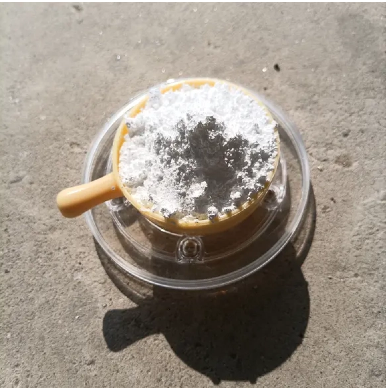
Nano-alumina (Al₂O₃) coatings consist of ultra-fine alumina particles, often in the range of 5–100 nanometers, applied as a thin layer onto the separator’s polymer surface. The coating adheres strongly to the polymer matrix, creating a composite structure that combines the flexibility of the polymer with the hardness, thermal stability, and chemical inertness of alumina.
Key Properties
Thermal Stability: Nano-alumina exhibits high melting points (>2000°C) and does not degrade at the temperatures encountered in normal and abuse battery conditions.
Mechanical Reinforcement: The inorganic coating enhances puncture resistance, tensile strength, and dimensional stability.
Flame Retardancy: Nano-alumina contributes to a higher ignition threshold, reducing the likelihood of thermal runaway.
Electrochemical Compatibility: It is chemically inert, preventing adverse reactions with electrolytes or electrode materials.
These properties make nano-alumina coatings an indispensable solution for high-performance and safe lithium-ion batteries.
Mechanisms of Safety Enhancement
Thermal Protection
During battery operation, local hotspots can develop due to uneven current distribution or external heating. Nano-alumina coatings improve thermal resistance, preventing the polymer separator from shrinking or melting. This thermal barrier can delay or prevent internal short circuits, providing critical response time before catastrophic failure occurs.
Mechanical Reinforcement
The ultra-fine alumina particles reinforce the separator membrane, increasing puncture resistance and maintaining structural integrity even under mechanical stress. This prevents dendrites — needle-like lithium deposits that can pierce separators — from causing short circuits.
Chemical Barrier
Nano-alumina coatings act as a chemical shield between the separator and electrolyte. They reduce oxidative degradation of the polymer, minimize hydrolysis, and enhance the overall chemical stability of the battery. This prolongs cycle life and maintains performance in demanding applications.
Methods of Applying Nano-Alumina Coatings
Slurry Coating
A common method involves preparing a slurry of nano-alumina particles in a binder solution and coating it onto the separator surface. After drying, the alumina forms a uniform thin layer. Factors affecting coating performance include:
Proper optimization ensures adhesion, flexibility, and effective thermal protection.
Atomic Layer Deposition (ALD)
For high-end applications, atomic layer deposition can produce ultra-thin, conformal alumina coatings at the nanoscale. ALD enables precise control over coating thickness and uniformity, offering superior thermal and chemical resistance without compromising separator porosity.
Sol-Gel Techniques
Sol-gel processing converts an alumina precursor into a ceramic coating on the separator. This method allows fine control over coating composition, thickness, and morphology, resulting in robust, high-performance nano-alumina layers.
Impact on Battery Performance
Improved Cycle Life
By mitigating separator shrinkage, dendrite penetration, and chemical degradation, nano-alumina coatings extend the cycle life of lithium-ion batteries. Batteries can endure more charge-discharge cycles without performance loss.
Enhanced Safety
Thermal and mechanical reinforcement significantly reduces the risk of thermal runaway, fires, or explosions. Nano-alumina coatings are particularly valuable in high-energy-density applications such as electric vehicles and aerospace batteries.
Stable Electrochemical Performance
Despite the added inorganic layer, properly designed coatings maintain high ionic conductivity and electrolyte wetting, ensuring minimal impact on energy efficiency and power delivery. This balance is crucial for consumer electronics, EVs, and grid storage applications.
Applications Across Industries
Electric Vehicles (EVs)
EV batteries operate under high currents and temperatures, demanding robust separator protection. Nano-alumina coatings reduce safety risks and maintain performance, enabling faster charging, higher energy density, and longer battery life.
Consumer Electronics
Smartphones, laptops, and wearables require compact batteries with high safety margins. Nano-alumina-coated separators prevent overheating and extend operational reliability, especially in high-density battery packs.
Aerospace and Aviation
In aerospace, battery failure is not an option. Coated separators improve thermal management, chemical stability, and mechanical integrity in extreme environmental conditions, ensuring reliable performance in aircraft, satellites, and drones.
Energy Storage Systems
Grid-scale energy storage systems benefit from improved thermal stability and flame resistance provided by nano-alumina coatings. These coatings enhance safety for large-format lithium-ion modules deployed in residential, commercial, or industrial applications.
Emerging Trends and Innovations
Nano-Alumina with Functional Additives
Research is exploring the incorporation of ceramic dopants or conductive particles into nano-alumina coatings to further improve thermal conductivity, electrochemical performance, or flame retardancy.
Ultra-Thin Coatings for High Energy Density
As battery energy density increases, thinner coatings with precise nanoscale control reduce internal resistance while maintaining safety, enabling next-generation high-capacity cells.
Green and Sustainable Processes
Eco-friendly synthesis of nano-alumina coatings, reduced solvent usage, and recycling of binders are emerging trends. Sustainable coating processes contribute to greener battery production without compromising performance.
Multi-Layer Separator Designs
Advanced separator designs combine nano-alumina layers with polymeric or ceramic composites, offering hierarchical protection that balances mechanical strength, thermal resistance, and ion transport.
Practical Considerations for Manufacturers
Coating Uniformity
Consistency is critical. Uneven coatings can create hotspots or weak points that compromise safety. High-precision deposition methods and quality control protocols are essential.
Adhesion and Flexibility
The alumina layer must adhere firmly without cracking or delaminating during cell assembly, bending, or thermal cycling.
Compatibility with Electrolytes
Nano-alumina must remain chemically inert and not react with lithium salts or solvents in the electrolyte. Optimizing particle size and surface chemistry ensures compatibility.
Scalability and Cost
Industrial adoption requires scalable processes that produce uniform coatings at competitive costs. Techniques such as slurry coating with optimized binders or roll-to-roll deposition provide practical solutions for large-scale battery manufacturing.
Conclusion
Nano-alumina coatings are revolutionizing lithium-ion battery technology by enhancing separator safety, thermal stability, mechanical strength, and chemical resistance. Their integration into battery separators addresses critical challenges such as dendrite formation, thermal runaway, and chemical degradation, while maintaining high electrochemical performance. These coatings are increasingly indispensable for high-density applications, including electric vehicles, consumer electronics, aerospace systems, and grid energy storage.
From an industry perspective, Jiangsu Shengtian New Materials Co., Ltd. offers high-quality nano-alumina powders and coating solutions tailored to the stringent requirements of modern lithium-ion batteries. Engineers, battery manufacturers, and technology developers seeking reliable, high-performance materials are encouraged to contact Jiangsu Shengtian to explore bespoke solutions that enhance both safety and performance in next-generation energy storage systems.
FAQ
Q: What are nano-alumina coatings used for in lithium-ion batteries?
A: They are applied to battery separators to improve thermal stability, mechanical strength, and chemical resistance, reducing safety risks.
Q: How do nano-alumina coatings prevent thermal runaway?
A: The coatings increase thermal resistance and mechanical integrity, helping separators maintain isolation even under high heat.
Q: Can these coatings impact battery performance?
A: Properly designed nano-alumina coatings maintain ion conductivity and electrolyte wetting, ensuring minimal effect on energy efficiency.
Q: Are nano-alumina coatings compatible with all lithium-ion battery chemistries?
A: Yes, they are chemically inert and can be tailored for different electrolytes and cathode/anode combinations.


