Water is one of the most valuable resources on Earth, yet it faces increasing threats from pollution, industrial effluents, and urban runoff. Effective wastewater treatment is essential for protecting public health, preserving ecosystems, and supporting sustainable development. Among the various strategies available, aluminum hydroxide plays a key role in improving the removal of suspended solids and contaminants through coagulation and flocculation processes.
In this article, we explore how aluminum hydroxide functions, why it is widely used in modern wastewater treatment, and how it contributes to efficient water purification. Drawing on our experience in the specialty chemicals sector, where we formulate and supply aluminum hydroxide to treatment facilities worldwide, this overview provides practical insights for engineers, plant operators, and environmental professionals to better understand its role in maintaining water quality and advancing sustainable treatment solutions.
Understanding Aluminum Hydroxide
What Is Aluminum Hydroxide?
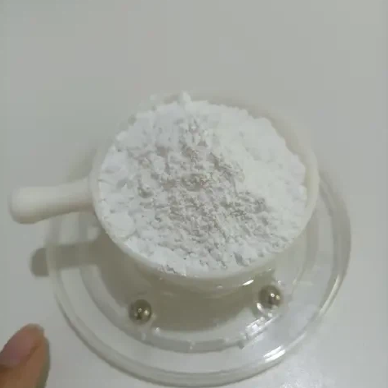
Aluminum hydroxide (chemical formula Al(OH)₃) is an inorganic compound commonly used as a precursor for other aluminum compounds and as a functional material in water treatment. It appears as a fine white powder that is amphoteric — capable of reacting both as an acid and a base — and has unique surface chemistry that makes it effective at interacting with a variety of contaminants in water.
In wastewater treatment, aluminum hydroxide is often generated in situ from aluminum salts (such as aluminum sulfate) or added in its preformed hydroxide form. When introduced into water, its surface chemistry facilitates the adsorption of suspended particles, colloids, and organic matter, which helps initiate the coagulation and flocculation processes.
Key Properties
Aluminum hydroxide has several properties that make it suitable for water treatment:
High surface area for adsorption of impurities
Amphoteric behavior allowing interaction with charged particles
Insolubility at neutral pH, enabling solid floc formation
Compatibility with other treatment chemistries
These characteristics support the effective removal of turbidity, color, and a range of dissolved and suspended contaminants.
The Basics of Coagulation and Flocculation
To appreciate how aluminum hydroxide functions in wastewater treatment, it’s important to understand the processes of coagulation and flocculation.
What Is Coagulation?
Coagulation is the process of destabilizing colloidal particles and suspended solids in water. Under normal conditions, fine particles carry an electrical charge that keeps them dispersed and resistant to settling. These charges cause repulsion between particles and prevent aggregation.
When a coagulant like aluminum hydroxide or aluminum sulfate is added to water, it neutralizes the charges on suspended particles. This destabilization allows particles to come closer together, overcoming the repulsive forces that previously kept them dispersed.
What Is Flocculation?
Flocculation follows coagulation. After particles have been destabilized, gentle mixing encourages them to collide and form larger aggregates — called flocs. These flocs are much heavier and larger than individual particles, so they can settle out of suspension or be removed more easily by subsequent treatment steps such as sedimentation, filtration, or flotation.
Flocculation is a physical process facilitated by gentle agitation, which increases particle collisions without breaking apart the forming flocs. The effectiveness of flocculation depends on coagulant dosage, mixing conditions, water chemistry, and the presence of other conditioning agents.
How Aluminum Hydroxide Supports Coagulation
Charge Neutralization and Adsorption
Aluminum hydroxide works primarily through charge neutralization and adsorption. When dissolved or dispersed in water, it forms positively charged hydroxyl complexes that interact with negatively charged particles — such as clay, organic colloids, or biological matter — neutralizing their charge. Once their charge is neutralized, these particles are more likely to aggregate.
In addition to charge effects, aluminum hydroxide has a high surface area that enables it to physically adsorb contaminants. This adsorption plays a significant role in capturing fine particles that would otherwise remain suspended.
Hydrolysis and Precipitate Formation
When aluminum salts are added to water, they undergo hydrolysis — a chemical reaction with water that forms aluminum hydroxide. This newly formed hydroxide precipitates as a gelatinous solid that entraps suspended particles during the flocculation process. The effectiveness of hydrolysis and precipitate formation depends on pH and water chemistry.
The Role of pH
The performance of aluminum hydroxide as a coagulant is strongly influenced by pH. In general:
Neutral pH ranges (6.5–8.5) are most conducive to aluminum hydroxide formation and effective particle capture.
At lower pH values, aluminum remains more soluble and may not form effective hydroxide precipitates.
At higher pH values, aluminum hydroxide can dissolve and reduce coagulation efficiency.
Careful monitoring and adjustment of pH during treatment helps maximize the effectiveness of aluminum hydroxide in coagulation and flocculation.
Practical Implementation in Wastewater Treatment
Dosage and Mixing
Determining the appropriate dosage of aluminum hydroxide or aluminum salt coagulants is essential. Overdosing can lead to excessive sludge production and increased treatment costs, while underdosing may result in insufficient particle removal.
Key factors to consider when dosing include:
Turbidity levels
Organic load
pH
Temperature
Ion composition of water
Jar tests — laboratory experiments in which different dosages and conditions are tested — are commonly used to establish the optimal coagulant dosage and mixing conditions for a specific wastewater stream.
Once the coagulant is added, rapid mixing promotes dispersion throughout the water column, followed by slower mixing to encourage flocculation. The sequence of mixing speeds and durations directly influences floc size and strength.
Sedimentation and Filtration
After flocs form, they must be separated from the water. This is typically achieved through sedimentation tanks, where gravity allows flocs to settle. The resulting sludge can then be removed and treated appropriately.
Subsequent filtration through sand or membrane filters helps capture residual particles, ensuring the water meets discharge or reuse standards.
Sludge Management
An important consideration in coagulation and flocculation processes is sludge production. Aluminum hydroxide precipitates and associated contaminants contribute to sludge volume. Effective sludge handling — dewatering, stabilization, and disposal — is critical for operational efficiency and environmental compliance.
Advantages of Using Aluminum Hydroxide in Treatment
Effective Removal of Fine Particles
Aluminum hydroxide is particularly effective at capturing fine colloidal particles that are difficult to settle by gravity alone. Its ability to neutralize charges and form cohesive flocs enhances removal efficiency.
Compatibility with Other Treatment Steps
Aluminum hydroxide integrates well with subsequent treatment processes:
This compatibility makes it a versatile choice for wastewater treatment plants of varying scales.
Cost-Effectiveness and Accessibility
Aluminum hydroxide and its precursor aluminum salts are widely available and relatively cost-effective compared to certain alternative coagulants. Their widespread use means operators have well-established protocols and supply chains for implementation.
Support for Regulatory Compliance
Effective coagulation and flocculation contribute to compliance with effluent standards related to turbidity, suspended solids, and other parameters. By improving removal efficiency, aluminum hydroxide helps wastewater treatment plants meet increasingly stringent environmental regulations.
Challenges and Considerations
Sensitivity to Water Chemistry
The performance of aluminum hydroxide depends on the specific chemistry of the wastewater. High concentrations of certain ions, dissolved organic matter, or extreme pH values can affect coagulation efficiency. Customizing treatment approaches and thorough water quality analysis are therefore necessary.
Sludge Volume and Disposal
While aluminum hydroxide enhances particle removal, it also contributes to sludge production. Managing this sludge, particularly in large-scale operations, can pose logistical and cost challenges. Operators must balance effective coagulation with efficient sludge handling strategies.
Environmental and Health Considerations
Though aluminum itself is generally considered safe within controlled limits, concerns have arisen regarding residual aluminum in treated water and potential downstream effects. Stringent process control, pH adjustment, and monitoring help mitigate residual aluminum levels, ensuring treated water is safe for discharge or reuse.
Case Studies and Real-World Applications
Municipal Wastewater Treatment
In municipal wastewater plants, aluminum hydroxide is widely used as part of the primary or secondary treatment stages. High inflows of organic matter, suspended solids, and colloidal contaminants benefit from coagulation and flocculation, resulting in clearer effluent and more efficient downstream processes.
Industrial Effluent Treatment
Certain industrial applications — such as textile processing, food and beverage manufacturing, and chemical production — generate wastewater containing high turbidity or color loads. Aluminum hydroxide's effective particle capture makes it suitable for treating these complex effluents before discharge or recycling.
Water Reuse and Resource Recovery
With the growing emphasis on water reuse, treatment plants are tasked with producing high-quality effluents suitable for non-potable applications like irrigation, industrial cooling, or flushing. Enhanced coagulation with aluminum hydroxide supports these reuse goals by improving water clarity and reducing contaminants.
Innovations in Coagulation and Flocculation
Polymer-Enhanced Flocculation
Emerging approaches combine aluminum hydroxide with organic polymers that enhance floc size and strength. These polymer-enhanced systems improve settling rates and reduce residual turbidity, making treatment more efficient.
Advanced Monitoring and Control
Modern wastewater treatment plants employ sensors and automated controls that adjust coagulant dosing in real time based on water quality metrics. These systems reduce chemical usage while maintaining treatment performance.
Hybrid Treatment Systems
Coagulation and flocculation with aluminum hydroxide can be integrated with advanced oxidation processes, membrane filtration, and bio-treatment steps, creating hybrid systems that tackle a wide range of contaminants.
Conclusion
Aluminum hydroxide is a cornerstone of effective wastewater treatment, particularly in coagulation and flocculation processes. Its ability to neutralize charges, adsorb particles, and form precipitates that support floc formation makes it invaluable for removing suspended solids, turbidity, and a host of contaminants. When combined with careful process control, pH management, and integrated treatment practices, aluminum hydroxide contributes to efficient and sustainable water purification.
From our perspective as a supplier and materials specialist, Jiangsu Shengtian New Materials Co., Ltd. recognizes the critical role that chemical coagulants like aluminum hydroxide play in modern water treatment systems. For engineers, operators, and environmental planners seeking reliable and high-quality materials for wastewater treatment applications, we invite you to contact Jiangsu Shengtian New Materials Co., Ltd. to learn more about our product formulations, technical support, and tailored solutions that help meet the evolving needs of water treatment facilities.
FAQ
Q: What role does aluminum hydroxide play in wastewater treatment?
A: Aluminum hydroxide acts as a coagulant that neutralizes particle charges and encourages floc formation, improving the removal of suspended solids and contaminants during coagulation and flocculation.
Q: How does pH affect the performance of aluminum hydroxide?
A: The effectiveness of aluminum hydroxide is highly sensitive to pH; neutral pH ranges (around 6.5–8.5) generally support better formation of hydroxide precipitates and efficient contaminant capture.
Q: Are there environmental concerns associated with using aluminum hydroxide?
A: When properly controlled, aluminum hydroxide is safe to use, but careful process control and monitoring are needed to prevent residual aluminum levels in treated water.
Q: Can aluminum hydroxide be combined with other treatment chemicals?
A: Yes. Aluminum hydroxide can be combined with polymers or integrated into multi-stage treatment systems, enhancing flocculation efficiency and supporting advanced water treatment goals.


