In the world of chemistry, some questions seem simple but unravel into fascinating discussions of definitions and properties. The question “Is magnesium hydroxide a strong base?” is a perfect example. If you look through different textbooks, online forums, and chemistry resources, you will likely find conflicting answers. Some sources confidently label it a strong base, while others categorize it as weak or “medium strong.”
This confusion arises from the interplay between two key chemical concepts: solubility and ionization. Magnesium hydroxide has unique characteristics that place it in a gray area, making a simple “yes” or “no” answer misleading. Understanding why requires a closer look at what it means for a base to be “strong” and how that strength is measured in a practical sense.
This post will clear up the confusion. We’ll explore the chemical properties of magnesium hydroxide, define what makes a base strong, and analyze why this specific compound is so often misclassified. By the end, you will understand not just the correct classification for magnesium hydroxide, but also the important nuances that govern the behavior of acids and bases in solution.
1. What Is Magnesium Hydroxide?
Before we can evaluate its strength as a base, it’s helpful to understand what magnesium hydroxide is and how it is used.
Basic Definition & Chemical Characteristics
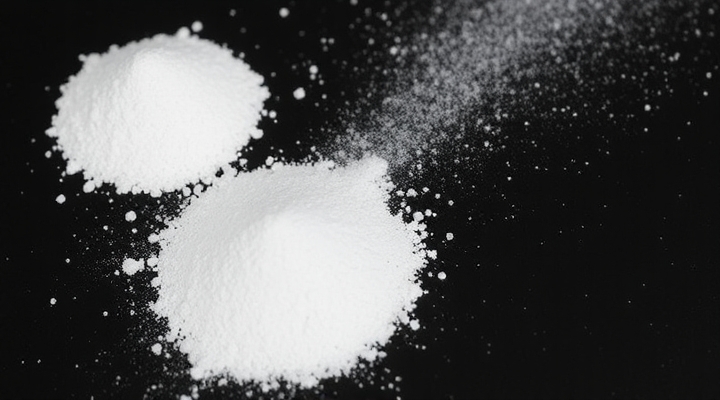
Magnesium hydroxide, with the chemical formula Mg(OH)₂, is an inorganic compound. It consists of a magnesium ion (Mg²⁺) bonded to two hydroxide ions (OH⁻). In its solid form, it is typically a white powder or a milky-white suspension in water, famously known as Milk of Magnesia.
From a chemical structure perspective, it is a metallic hydroxide. The bond between the magnesium and the hydroxide ions is ionic. This ionic character is crucial because it means that when the compound dissolves in water, it has the potential to break apart into its constituent ions. This process, called dissociation or ionization, is what allows it to function as a base.
One of its most defining characteristics, however, is its very low solubility in water. At room temperature, only a tiny amount of magnesium hydroxide—about 9 milligrams per liter—will dissolve. This limited solubility is a major factor in its overall behavior and a key reason for the debate over its strength.
Key Uses (Antacids and Industrial Applications)
Despite its seemingly simple chemistry, magnesium hydroxide has a wide range of important applications.
Antacids: Its most well-known use is as an active ingredient in antacids, such as Milk of Magnesia. When it reacts with excess stomach acid (hydrochloric acid, HCl), it neutralizes the acid, forming magnesium chloride and water. Its low solubility makes it an ideal choice because it acts gently and provides sustained relief without drastically increasing the stomach’s pH.
Laxatives: In higher doses, magnesium hydroxide acts as an osmotic laxative. The undissolved portion draws water into the intestines, which helps soften stool and stimulate bowel movements.
Industrial Applications: In industrial settings, magnesium hydroxide is used as a non-toxic flame retardant and smoke suppressant in plastics and other materials. When heated, it decomposes, releasing water vapor that cools the material and dilutes flammable gases. It is also used in wastewater treatment to precipitate heavy metals and neutralize acidic wastewater.
2. What Defines a Strong Base?
To accurately classify magnesium hydroxide, we must first have a clear, scientific definition of a “strong base.” In chemistry, the terms “strong” and “weak” have very specific meanings that are different from their everyday usage.
Complete Dissociation into OH⁻ Ions
The defining characteristic of a strong base is its ability to dissociate completely (or nearly 100%) into its ions when dissolved in an aqueous solution. For a metal hydroxide, this means every single formula unit that dissolves in water separates into a metal cation and one or more hydroxide ions (OH⁻).
For example, sodium hydroxide (NaOH) is a classic strong base. When solid NaOH is added to water, it dissolves and completely ionizes:
NaOH(aq) → Na⁺(aq) + OH⁻(aq)
There are essentially no undissociated NaOH units left in the solution. This complete ionization results in a high concentration of hydroxide ions, which is what gives the solution its strong basic properties and a very high pH.
Other common examples of strong bases include the hydroxides of other alkali metals (like KOH) and several alkaline earth metals (like Ca(OH)₂, Sr(OH)₂, and Ba(OH)₂).
Why Solubility Matters When Evaluating Strength
Here is where the confusion often begins. The definition of a strong base is about complete ionization of the dissolved portion, not about how much of the substance dissolves in the first place. This distinction is critical.
A substance can be a strong base even if it is not very soluble. Calcium hydroxide, Ca(OH)₂, is a great example. It is considered only “sparingly soluble” in water. However, the small amount of Ca(OH)₂ that does dissolve undergoes 100% ionization:
Ca(OH)₂(aq) → Ca²⁺(aq) + 2OH⁻(aq)
Because of this complete dissociation, calcium hydroxide is classified as a strong base. Its limited solubility simply means that you can’t create a highly concentrated solution of it. The resulting solution will be strongly basic, but not as basic as a concentrated solution of a highly soluble strong base like NaOH. This difference between ionization and solubility is the key to understanding magnesium hydroxide.
3. Is Magnesium Hydroxide a Strong Base?
With a clear definition of a strong base, we can now analyze magnesium hydroxide. It possesses properties that seem contradictory at first glance, leading to its debated status.
The Core Confusion: Strong Dissociation vs. Low Solubility
The central issue with classifying Mg(OH)₂ is that it exhibits the properties of a strong base (complete dissociation) but is limited by the properties of a weak base (low concentration of OH⁻ ions) due to its extremely low solubility.
Let’s break this down:
Ionization: The portion of magnesium hydroxide that actually dissolves in water does dissociate completely into magnesium ions (Mg²⁺) and hydroxide ions (OH⁻). In this respect, it behaves like a strong base.Mg(OH)₂(aq) → Mg²⁺(aq) + 2OH⁻(aq)
Solubility: However, its solubility is incredibly low. Because so little of it can dissolve at any given time, the total concentration of OH⁻ ions in the solution remains very low. In this practical respect, it behaves like a weak base, producing only a mildly alkaline solution.
This dual nature is why the classification is so tricky. If you focus solely on the definition of 100% ionization, it qualifies as strong. If you focus on the resulting pH and hydroxide concentration in a typical solution, it appears weak.
Why Some Sources Classify It as “Medium Strong” or “Weakly Soluble Strong Base”
Because of this nuance, chemists have tried to find more descriptive labels.
“Medium Strong Base”: This term is often used in introductory chemistry to bridge the gap. It acknowledges that while it’s not weak in the traditional sense (incomplete dissociation), it doesn’t produce the high pH of a classic strong base like NaOH.
“Sparingly Soluble Strong Base”: This is arguably the most accurate and descriptive classification. It correctly identifies both key properties: its limited solubility (“sparingly soluble”) and the complete ionization of its dissolved portion (“strong base”). This label avoids the simple “strong” or “weak” dichotomy and provides a fuller picture of its chemical behavior.
4. Why Magnesium Hydroxide Is Not a Classic Strong Base
While magnesium hydroxide technically fits the ionization criteria for a strong base, it is almost never included in the standard list of strong bases taught in general chemistry. The primary reason is its practical effect in solution, which is governed by its solubility.
Low Solubility Limits OH⁻ Concentration
The defining feature of a classic strong base is its ability to generate a high concentration of OH⁻ ions, leading to a very high pH (typically 13-14 for a 1 M solution). Magnesium hydroxide simply cannot do this.
Its low solubility acts as a bottleneck. Even in a saturated solution, where the maximum possible amount of Mg(OH)₂ has dissolved, the concentration of OH⁻ ions remains low. This is why you can safely handle and even ingest Milk of Magnesia, whereas a similarly prepared solution of sodium hydroxide would be highly corrosive and dangerous.
Comparison with Other Alkaline Earth Metal Hydroxides
Comparing Mg(OH)₂ to other Group 2 hydroxides highlights the importance of solubility trends. As you move down the alkaline earth metals in the periodic table, the solubility of their hydroxides increases:
Magnesium Hydroxide (Mg(OH)₂) - Very low solubility
Calcium Hydroxide (Ca(OH)₂) - Sparingly soluble
Strontium Hydroxide (Sr(OH)₂) - More soluble
Barium Hydroxide (Ba(OH)₂) - Reasonably soluble
All of these are considered strong bases because their dissolved portions ionize completely. However, only Ca(OH)₂, Sr(OH)₂, and Ba(OH)₂ are typically listed as strong bases in textbooks. Mg(OH)₂ is often excluded because its solubility is so much lower than the others that its practical behavior is significantly different.
Practical Behavior in Water (Mild Alkalinity)
If you were to add solid magnesium hydroxide powder to water and measure the pH, you would find that it creates a mildly basic solution. A saturated solution of Mg(OH)₂ has a pH of around 10.5. While this is clearly basic (a neutral pH is 7), it is nowhere near the pH of 14 that a 1 M solution of NaOH would have. This mild alkalinity is a direct result of the low concentration of dissolved OH⁻ ions.
5. Final Verdict: Is Magnesium Hydroxide a Strong Base?
So, what is the definitive answer? It depends on which aspect of its chemistry you prioritize.
From a pure chemical definition standpoint: The dissolved portion of magnesium hydroxide ionizes 100%, which aligns with the definition of a strong base.
From a practical, application-oriented standpoint: Due to its extremely low solubility, it produces only a low concentration of hydroxide ions, resulting in a mildly basic solution. In this sense, it behaves like a weak base.
The most complete and accurate classification is a sparingly soluble base with strong ionization characteristics. For students in introductory chemistry, it’s often simplest to remember that while it fits the technical definition of strong, its practical effects are weak, and it is usually excluded from the list of common strong bases.
6. Quick FAQs
Is Mg(OH)₂ stronger than NaOH?
No. Sodium hydroxide (NaOH) is a much stronger base in practical terms because it is highly soluble in water and also dissociates completely. This allows it to create solutions with a very high concentration of OH⁻ ions and a much higher pH.
Why do some textbooks call Mg(OH)₂ a strong base?
Textbooks that label Mg(OH)₂ as a strong base are focusing strictly on the definition of complete (100%) dissociation of whatever amount dissolves. They are prioritizing the theoretical definition of strength over the practical outcome in solution.
Does magnesium hydroxide raise pH quickly?
No. Because it dissolves very slowly, it raises the pH of a solution gradually. This slow, controlled release of hydroxide ions is precisely why it is effective and safe as an antacid.
Why is Mg(OH)₂ safe in antacids?
Its safety comes directly from its low solubility. The body is never exposed to a high concentration of hydroxide ions at once. The solid magnesium hydroxide acts as a reservoir, dissolving only as needed to neutralize excess acid, which prevents any drastic or harmful shifts in the stomach’s pH.
Jiangsu Shengtian New Materials Co., Ltd.is a leading manufacturer of inorganic ultra-fine functional powders, offering high-purity aluminum hydroxide and a wide range of advanced material solutions. With strong R&D capabilities and modern production facilities, we supply reliable, high-performance products for industries including electronics, flame-retardant materials, ceramics, plastics, and water treatment. As a trusted global partner, we are committed to quality, innovation, and long-term customer value.


