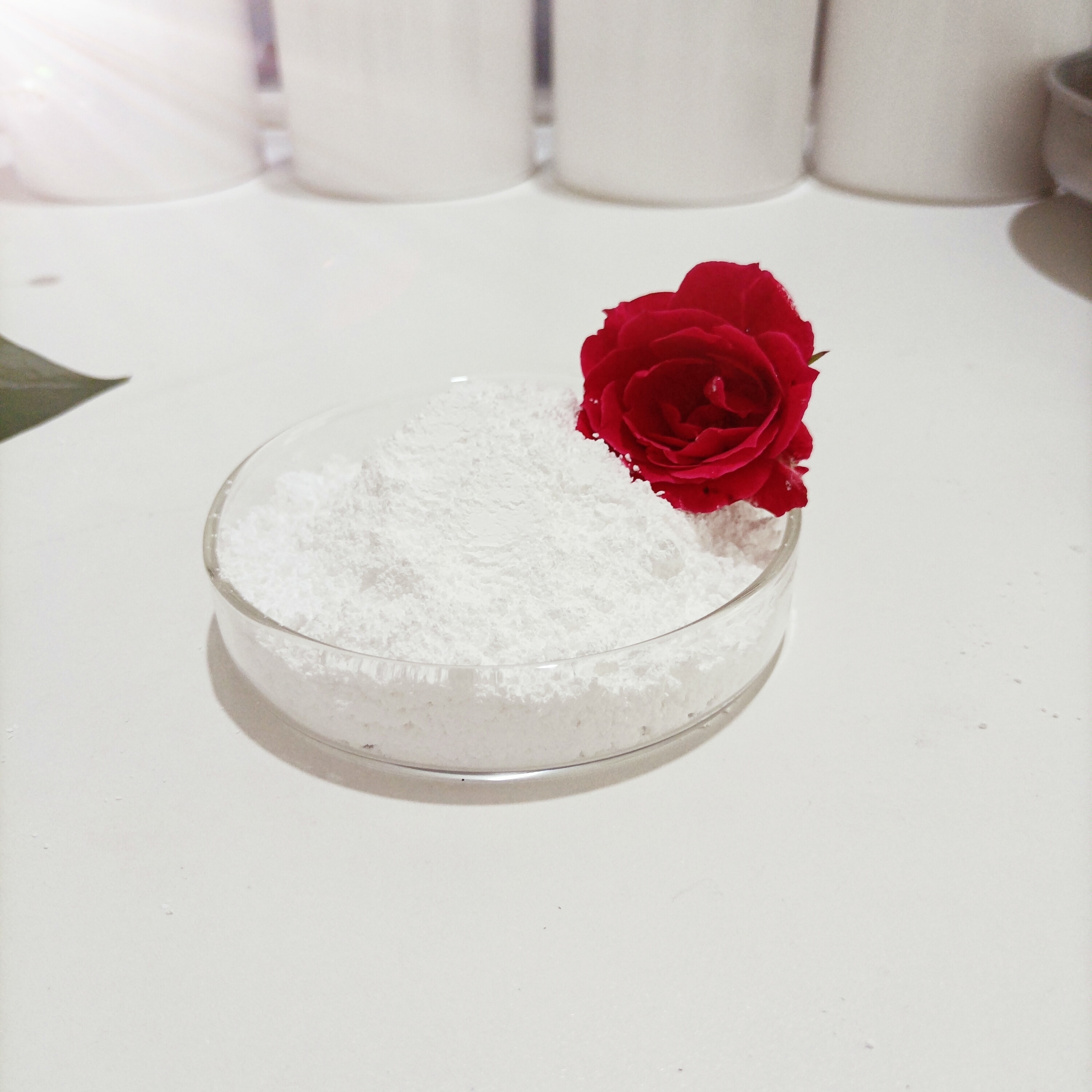
Advanced ceramics rarely fail because of one dramatic event. More often, performance changes begin with filler purity, particle size control, and thermal behavior. This article looks at alumina materials from that practical angle and explains why spherical alumina powder has become important for ceramic, electronic, and thermal-management designs.
What Are Alumina Materials in Advanced Ceramics?
Practical Context
Alumina materials are aluminum-oxide-based powders and fillers used where hardness, insulation, thermal stability, and chemical resistance are important. In advanced ceramics, alumina can support wear resistance, dielectric strength, and dimensional stability under demanding conditions.
Performance Factors
The term covers more than one grade. Particle morphology, purity, surface treatment, and thermal behavior decide how a material performs in a ceramic body, a thermal interface compound, or an insulating system. Spherical alumina is especially useful where formulators need high loading and manageable viscosity.
Buyer Considerations
For applications that require heat flow and electrical insulation, high reliability spherical alumina powder can be evaluated alongside other inorganic fillers to build a more stable formulation.
Why Alumina Matters for Thermal and Electrical Performance
Practical Context
Ceramic components often face heat, voltage, mechanical stress, and chemical exposure together. Alumina is attractive because it provides a balanced combination of hardness, insulation, and stability. In thermal interface systems, spherical alumina can improve heat transfer paths while preserving processability.
Performance Factors
In electronic insulation, filler selection affects dielectric strength, volume resistivity, and long-term reliability. A material with poor dispersion may create weak zones in the compound. A material with the wrong particle size may raise viscosity too sharply. For this reason, ceramic engineers evaluate alumina as part of a full formulation, not as an isolated ingredient.
Buyer Considerations
In high-power electronics, LED modules, battery systems, and industrial adhesives, alumina can help manage temperature without sacrificing insulation performance.
Advanced Ceramic Application Areas
Practical Context
Alumina materials are used in substrates, insulating parts, electronic fillers, polishing media, wear-resistant parts, and thermally conductive composites. Each application demands a different balance of purity, size, morphology, and compatibility.
Performance Factors
For ceramic shaping, powder behavior affects packing density and sintering behavior. For polymer composites, surface compatibility affects dispersion and mechanical integrity. For thermal materials, loading level, particle distribution, and binder compatibility determine final conductivity.
Buyer Considerations
A practical evaluation should compare candidate grades through mixing trials, rheology testing, thermal analysis, and final application validation.
Buying Guide for Industrial Buyers
Start with the Application, Not Only the Product Name
A reliable purchase decision begins with the working environment. For materials, buyers should define processing temperature, binder chemistry, particle size requirements, storage conditions, and final performance targets. For AR devices, buyers should define work scenarios, connection environment, wear time, data workflow, and software requirements. A product name is useful, but it is not enough to qualify a technical solution.
Review Documentation and Validation Samples
Documentation helps teams compare suppliers on more than marketing language. Useful documents include technical data sheets, safety data sheets, certificates, product specifications, inspection records, and application notes. Samples are equally important because real validation often reveals processing details that are not visible in a product description.
Match Supplier Support to Project Risk
The higher the project risk, the more important supplier support becomes. A standard reorder may only need stable logistics and consistent batches. A new formulation, new device deployment, or export project usually needs technical discussion, sample follow up, and specification alignment. This is where a focused manufacturer such as Shengtian can add value by helping buyers connect product choices to real use cases.
Material selection should move from data sheet review to laboratory validation. Start with a small batch that reflects the final binder, mixing sequence, shear conditions, and loading level. This helps identify viscosity changes, wetting issues, sedimentation, or unexpected surface defects before the material enters a larger production trial.
Check Performance After Processing
A powder can meet incoming specifications but still behave differently after compounding, molding, curing, or coating. Buyers should test final parts or films for mechanical strength, thermal behavior, dielectric performance, appearance, and aging stability. This is especially important for electronics, coatings, and flame-retardant applications.
Build a Supplier Communication Loop
Technical feedback should move both ways. If a trial shows high viscosity, poor dispersion, or surface defects, the supplier may recommend a different particle size, surface treatment, or blended grade. This communication loop helps turn a material purchase into a more reliable engineering decision.
Common Mistakes to Avoid
Buying by Product Name Alone
A product name such as alumina materials is only the starting point. Two powders with similar names can behave very differently because of particle size, impurity level, morphology, moisture, and surface treatment. Buyers should not assume that a grade is suitable until it has been tested in the actual formulation.
Overlooking Processing Behavior
Some fillers look strong in a specification sheet but create problems during mixing, coating, molding, or extrusion. Viscosity, dispersion, settling, and equipment wear can influence production stability. A material that performs well in a final property test may still be difficult to process if it does not fit the production line.
Skipping Batch Consistency Review
Industrial production depends on repeatability. Buyers should evaluate batch records, documentation habits, and supplier quality systems. Stable supply is especially important for electronics, coatings, insulation materials, and flame-retardant compounds.
Anonymous Competitor Comparison
The table below uses anonymous market references for the same product category. It is intended as a procurement checklist, not as a claim about any named competitor.
Specification
Shengtian material Reference
Competitor A
Competitor B
Industry Average
Application focus
Advanced ceramics, thermal interface materials, and insulation systems
General industrial use
Narrow application range
Mixed use supply
Customization
Particle size and surface treatment options
Limited adjustment
Standard grade only
Basic specification options
Quality documentation
Batch records and technical data support
Partial documentation
Basic product sheet
Varies by supplier
Processing support
Formulation oriented technical guidance
Limited support
Sales only support
Moderate support
Stability priority
controlled morphology for thermal and processing stability
Standard stability
Variable consistency
Acceptable for common use
Technical Specification Checklist for Alumina Materials
Evaluation Item
Why It Matters
Recommended Review Point
Purity
Impurities can affect dielectric, color, and thermal stability
Confirm grade, test method, and batch record
Particle size distribution
Controls viscosity, filling rate, surface finish, and packing density
Review D50, D90, and distribution width
Morphology
Shape affects flowability, abrasion, and resin loading
Compare spherical, angular, and modified forms
Moisture and loss on ignition
Impacts compounding stability and storage behavior
Confirm moisture limits and packaging method
Surface treatment
Improves compatibility with resin, rubber, coating, or ceramic systems
Match treatment chemistry to the binder system
Documentation
Reduces approval risk for industrial procurement
Request COA, SDS, and application guidance
Market Trends and Application Outlook
Industrial materials are moving toward tighter specifications, cleaner documentation, and closer cooperation between suppliers and formulators. Buyers want powders that support higher performance while keeping processing stable. In electronics, miniaturization and thermal density continue to raise expectations for purity, insulation, and particle control. In coatings and composites, customers want fillers that improve durability without creating unstable viscosity or poor surface finish.
Another important trend is customized material matching. Many applications no longer use a single standard grade. They require a specific particle distribution, surface treatment, or blended filler system. This makes supplier communication more important because material performance is often determined by the interaction between filler and formulation.
Sustainability also shapes material decisions. Longer product life, safer flame-retardant systems, reliable insulation, and improved thermal management all support better resource efficiency. Functional powders are small components in a final product, but they can influence durability and reliability in a meaningful way.
Conclusion
Alumina Materials: Advanced Ceramic Applications is more than a general product topic. It is a practical decision area where technical details, application goals, supplier capability, and validation discipline all matter. Buyers who define their operating conditions clearly can compare products more accurately and avoid mismatched specifications.
For industrial buyers, the safest approach is to combine product data with sample testing and supplier communication. Whether the project involves functional powder materials or wearable AR systems, the best outcome comes from choosing a solution that fits the application, not just the category name.
FAQ
Q: What are alumina materials used for?
A: Alumina materials are used in advanced ceramics, insulation, thermal composites, wear-resistant parts, and electronic materials.
Q: Why is spherical alumina important?
A: Spherical alumina improves flowability and supports higher filler loading in thermal and insulating formulations.
Q: Are alumina materials electrically insulating?
A: Many alumina grades offer strong electrical insulation, which makes them useful for electronic and electrical systems.
Q: How do buyers choose alumina powder?
A: Buyers should check purity, particle size, morphology, thermal conductivity, surface treatment, and compatibility with the target binder.
Q: Can alumina materials support heat dissipation?
A: Yes, alumina fillers are widely considered where thermal transfer and electrical insulation are both required.
Q: What tests are useful for alumina materials?
A: Particle analysis, thermal conductivity testing, dielectric testing, rheology studies, and application trials are useful.